
When Were Greek Statues Truly Ancient?
You see it in museums: Greek statues behind glass, the oldest treasures imaginable—right? But to an ancient Greek, many of these statues were brand new.
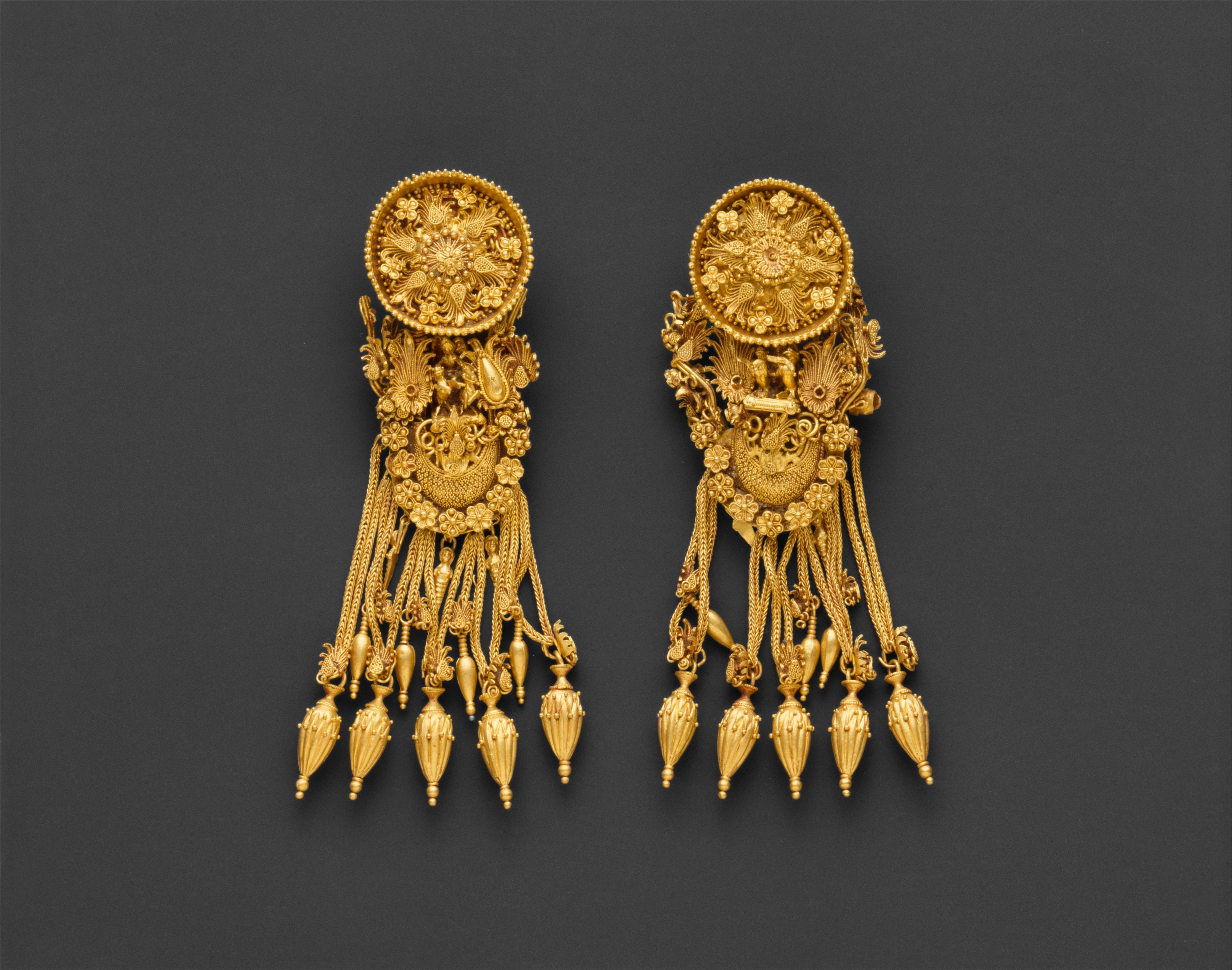
Unknown — "Gold earrings with disk and boat-shaped pendant" (ca. 300 BCE), public domain
Greek statues as relics? Not in their day.
Picture a block of marble, freshly carved, painted, and glowing in the sun. To ancient Athenians, the Parthenon Marbles were the height of fashion—proud, new, and dazzling. The very idea of 'classical' only became meaningful centuries later, when Romans started hoarding old Greek art.
Art for rivalry—then, sometimes, recycled.
Cities poured money into statues to outdo their neighbors or woo the gods. Some statues, like the colossal Zeus at Olympia, were seen by crowds for just a few centuries. Others were removed or even melted down for coin. The sense of 'ancient masterpiece' is a modern view. Greeks wanted the latest thing, not dusty antiques.
Inventing 'ancient' art: the Roman craze.
Romans craved Greek statues, sometimes pulling them from sanctuaries or making their own copies. That’s when the myth of 'timeless antiquity' really took root. What we see as ancient, the Greeks saw as bold statements and, sometimes, yesterday’s news.
Most famous Greek statues weren't seen as 'ancient' by the Greeks themselves. They were cutting-edge, sometimes controversial art—commissioned to impress rivals or the gods. Some stood for only a generation before being replaced, moved, or even melted down for bronze.
