
Greek Statues: Not Bare White Marble
You picture Greek statues: pristine white marble, bare and austere. But walk into a sacred sanctuary in 450 BCE and the gods stare back in full color—blue, red, gold, and even lipstick.
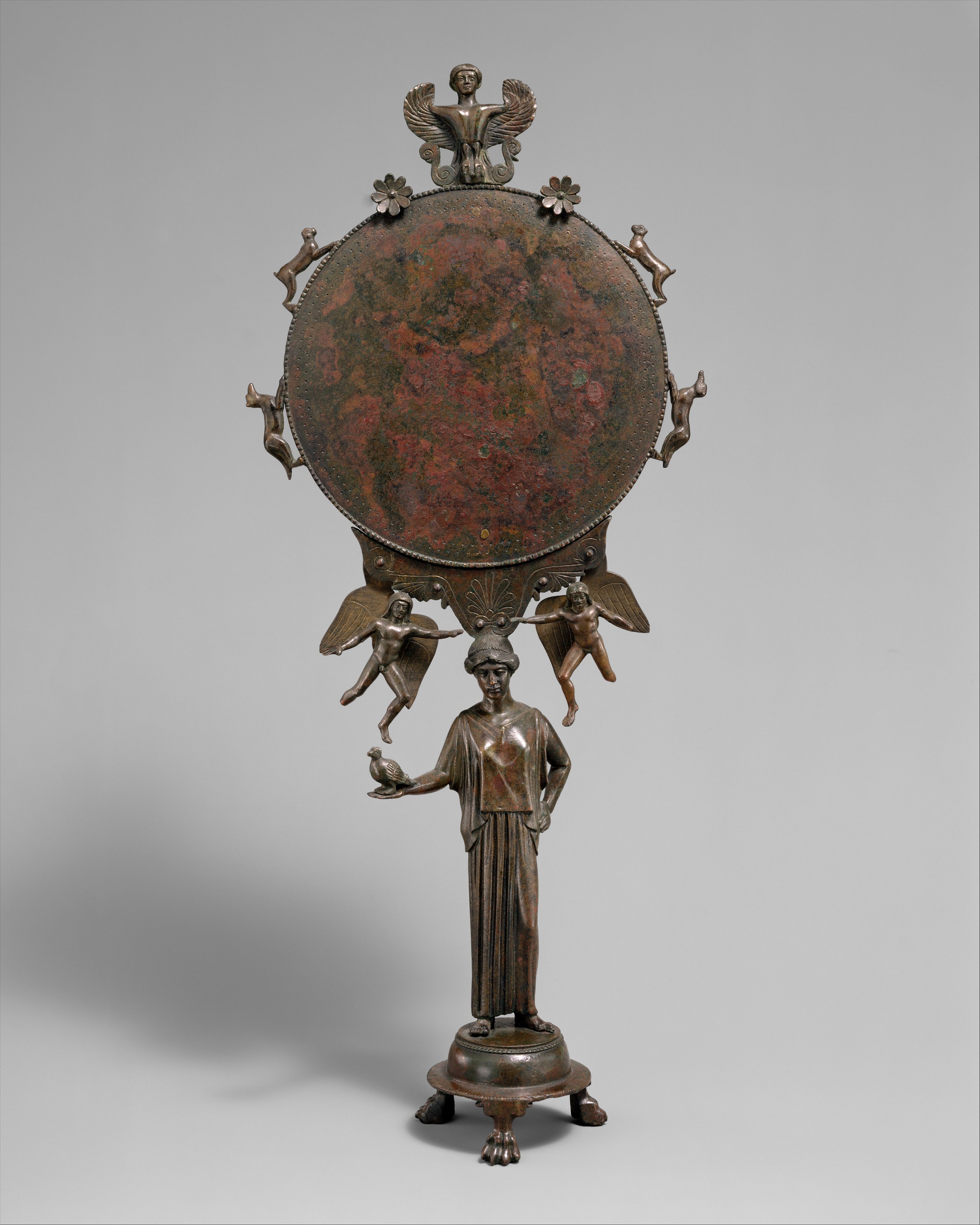
Unknown — "Bronze mirror with a support in the form of a draped woman" (mid-5th century BCE), public domain
Everyone thinks Greek statues were pure white.
Step into any museum and the Greek gallery dazzles: row after row of white marble gods. It's become a symbol of ancient beauty—purity, perfection, blank stone. The myth seems unbreakable: Greeks loved their statues plain.
The truth: statues were painted loud and bright.
Ancient writers called it 'polychromy.' Artists slathered statues with blue, red, ochre, gold leaf, even jewel-bright eyes. Traces of pigment linger on original works—modern science has revealed invisible splashes of color. The Parthenon’s Athena was a painted giant, not a ghost.
How did we get it so wrong?
Centuries of weather stripped the paint. Renaissance sculptors fell for naked marble and copied it—white became the 'classical' look. By the time archaeology caught up with the evidence, the myth was set in stone.
High-tech scans, specks of pigment, and ancient authors all agree: Greek statues were painted in bold, sometimes wild, colors. The blank marble look is a modern fantasy.
