
Greek Statues: Not Just Bare White Marble
Think all Greek statues were gleaming white, bare marble? They once blazed with color—reds, blues, even gold leaf.
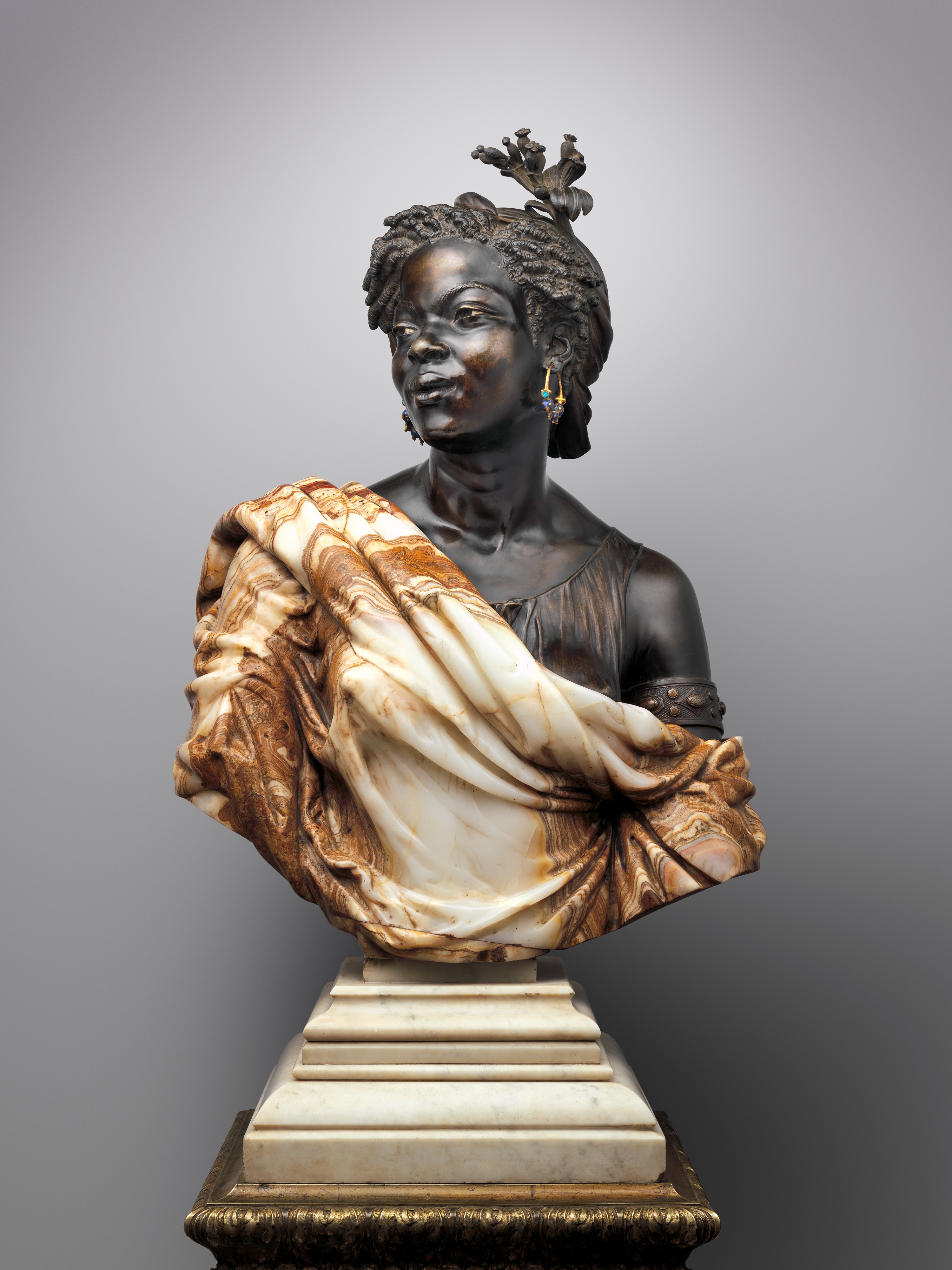
Charles-Henri-Joseph Cordier — "Woman from the French Colonies" (1861), public domain
The myth of pure white marble.
Every museum, every textbook: Greek statues, flawless and white, staring calmly across the centuries. We picture the Parthenon gleaming, the gods ghostly pale. No color, just cold perfection. But that’s a lie we’ve inherited from time—and the Victorians.
Greeks loved bold color.
Scrape beneath the surface and you find it: pigment trapped in hairlines, robe folds, sandal straps. Ancient sculptures were painted in riotous hues—reds, blues, ochres, even gilded. Scientists use ultraviolet light and digital reconstructions to show what time erased. The gods once blazed like carnival floats.
How did the myth take hold?
By the 1700s, weathered white statues flooded European collections. Influencers like Winckelmann praised their "noble simplicity." The color was gone, so everyone thought it never existed. Turns out, the ancients had a brighter palette than most modern art galleries.
Time and weather stripped away ancient paint, but traces remain. Using high-tech tools, archaeologists have uncovered bold pigments on sculptures like the Parthenon marbles—turning our image of calm, white antiquity on its head.
