
Were All Greek Statues Naked?
Every museum hall: rows of naked Greek statues, perfect abs and nothing to hide. It's easy to think the Greeks sculpted everyone in the nude.
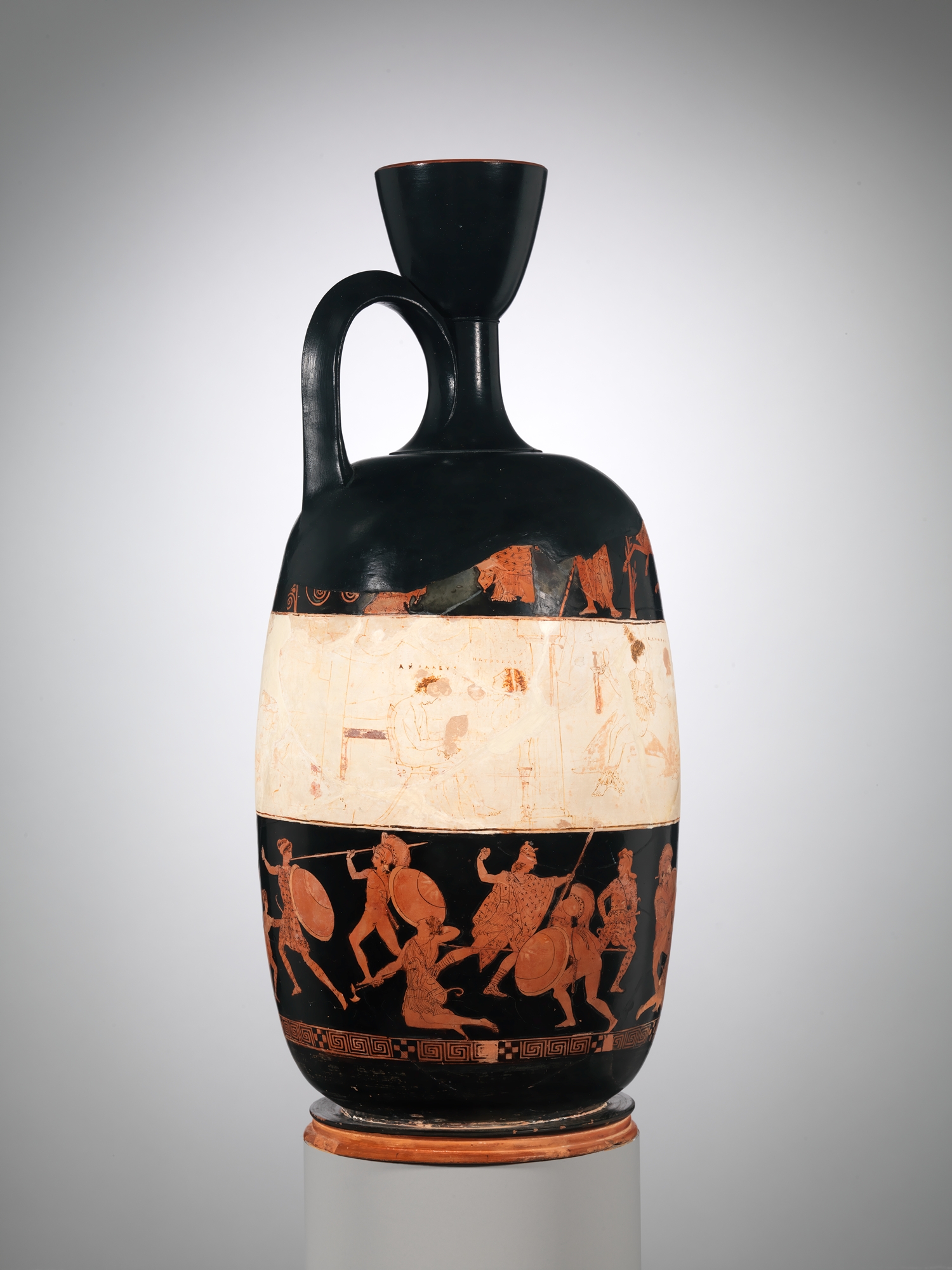
Eretria Painter — "Terracotta lekythos (oil flask)" (ca. 420 BCE), public domain
The naked marble myth.
Every Greek statue in the museum stands bare to the world—smooth marble skin, not a drape in sight. It's easy to believe the Greeks sculpted everyone naked, from gods to athletes to philosophers. But that's just what survived—and what curators like to display.
The dressed-up truth.
Ancient Greek artists carved plenty of statues in full, elaborate clothing—especially women, public figures, and elders. Famous works like the Peplos Kore and the Charioteer of Delphi wear draped robes or bronze tunics. Many ‘naked’ statues were reserved for gods, heroes, and athletes—the models of virtue and strength.
How the myth took hold.
Most clothed statues were made in bronze and later melted down for scrap. The nude marble gods and athletes survived earthquakes, fires, and centuries underground. When museums put them front and center, it created a world that never existed—an ancient Greece where no one wore pants.
Greek artists carved plenty of figures fully clothed—especially women, philosophers, and civic leaders. The sea of nudity is a modern museum illusion, not ancient reality.
