
Ancient Greek Theaters Had Sonic Engineering
Whisper on stage at Epidauros and the audience—14,000 people—can hear every word, even from the back row.
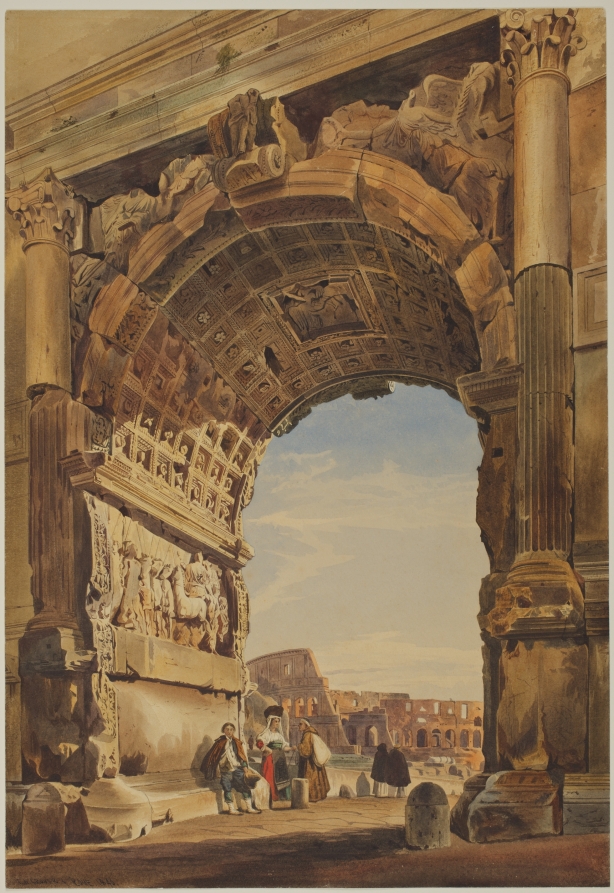
Thomas Hartley Cromek (British, 1809–1873) — "The Arch of Titus and the Coliseum, Rome" (1846), CC0
A Whisper Carries Across the Stage
In the theater at Epidauros, an actor can drop a coin or speak softly—and the sound reaches every seat. Modern tests confirm this isn't legend. The structure’s perfect acoustics come from rows of limestone seats, carefully arranged to reflect and filter sound.
Ancient Sonic Engineering
Greek architects didn't just build for beauty. They engineered for the ear. The theater's design strips away low-frequency noise from the crowd and boosts the actors’ voices—no need for amplification. It's not just art, it's physics.
Archaeologists have measured how the curved limestone seats of Greek theaters scattered sound waves, filtering out crowd noise and amplifying the actors. No microphones. Just two thousand years of sonic genius, still working today.
