
Poison in the Lamp: Leaded Wicks and Greek Nights
A Greek household lights the night with a flickering lamp—its wick soaked in olive oil, wrapped around a strip of lead.
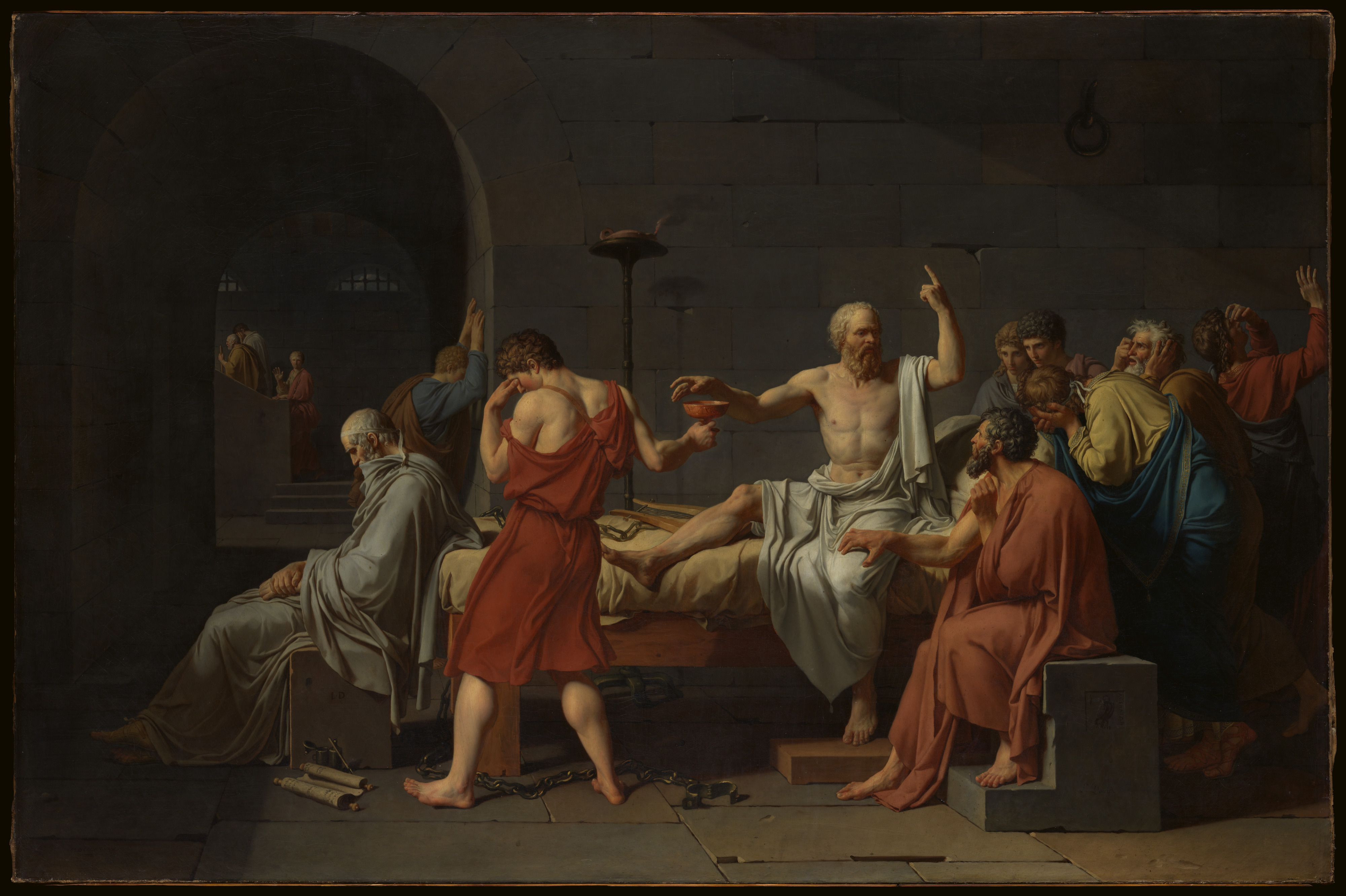
David — "The Death of Socrates" (1787), public domain
A Glowing Danger: Lead in the Lamplight
A Greek household lights the night with a flickering lamp—its wick soaked in olive oil, wrapped around a strip of lead. The room glows yellow, but the air slowly fills with poison. Comfort and risk, burning side by side.
Archaeology in the Ashes
Lead strips coiled around ancient lamp wicks have turned up in tombs and houses from Athens to Sicily. Scholars now know the Greeks used them to steady the flame—and likely never realized the price of these radiant evenings: a slow dose of lead, inhaled every night.
Many ancient Greek lamps used lead strips or coils to stiffen the wick and keep it burning. The result? Night after night, families inhaled a slow trickle of lead fumes in the dark. Archaeologists have found these leaded wicks in graves and house ruins across the Greek world—proving that even the simplest comfort could have a hidden cost.
