
Greek Myths as Sacred Scripture
You imagine ancient Greeks reading their myths from a sacred book, like the Bible. In reality, Homer and Hesiod were as much pop culture as scripture.
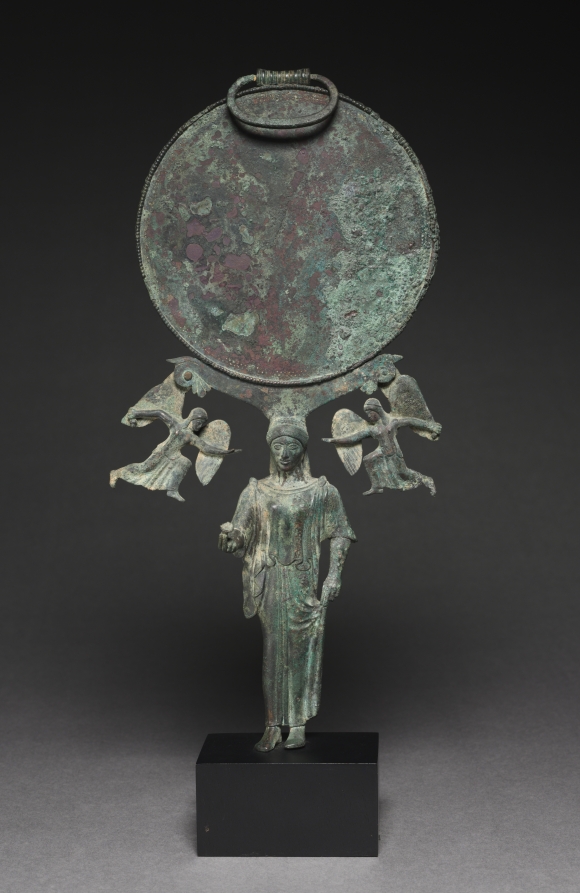
Unknown — "Mirror" (c. 470–460 BCE), CC0
Greek myth was not holy writ.
You picture Greeks with a single, sacred book of myths—an ancient Bible, copied and studied. But there was no 'official' version of the myths. Not one text, not even Homer or Hesiod, had the final word.
Myths lived, changed, and argued.
Greek myths were stories performed in public, retold at festivals, painted on vases, and debated in plays. Poets changed details, cities claimed their own heroes, and audiences loved a twist: Athena's birth, the fate of Oedipus, the deeds of Heracles. No priest enforced a canon—myth was messy, alive, and fiercely local.
Why do we think they had sacred texts?
Modern habits die hard. We project the idea of a single, holy book onto the past—especially after centuries of religious scripture. But for Greeks, mythology was theater, art, and argument, not dogma written in stone.
Greek myths evolved through oral tradition, performance, and local retelling—never frozen in a single holy text. They were endlessly argued, adapted, and remixed.
