
Greek Hoplite Armor: Not Shining Iron
Picture a Greek hoplite: gleaming in shining iron, helmet to greaves. But the classic hoplite panoply? Bronze, not iron.
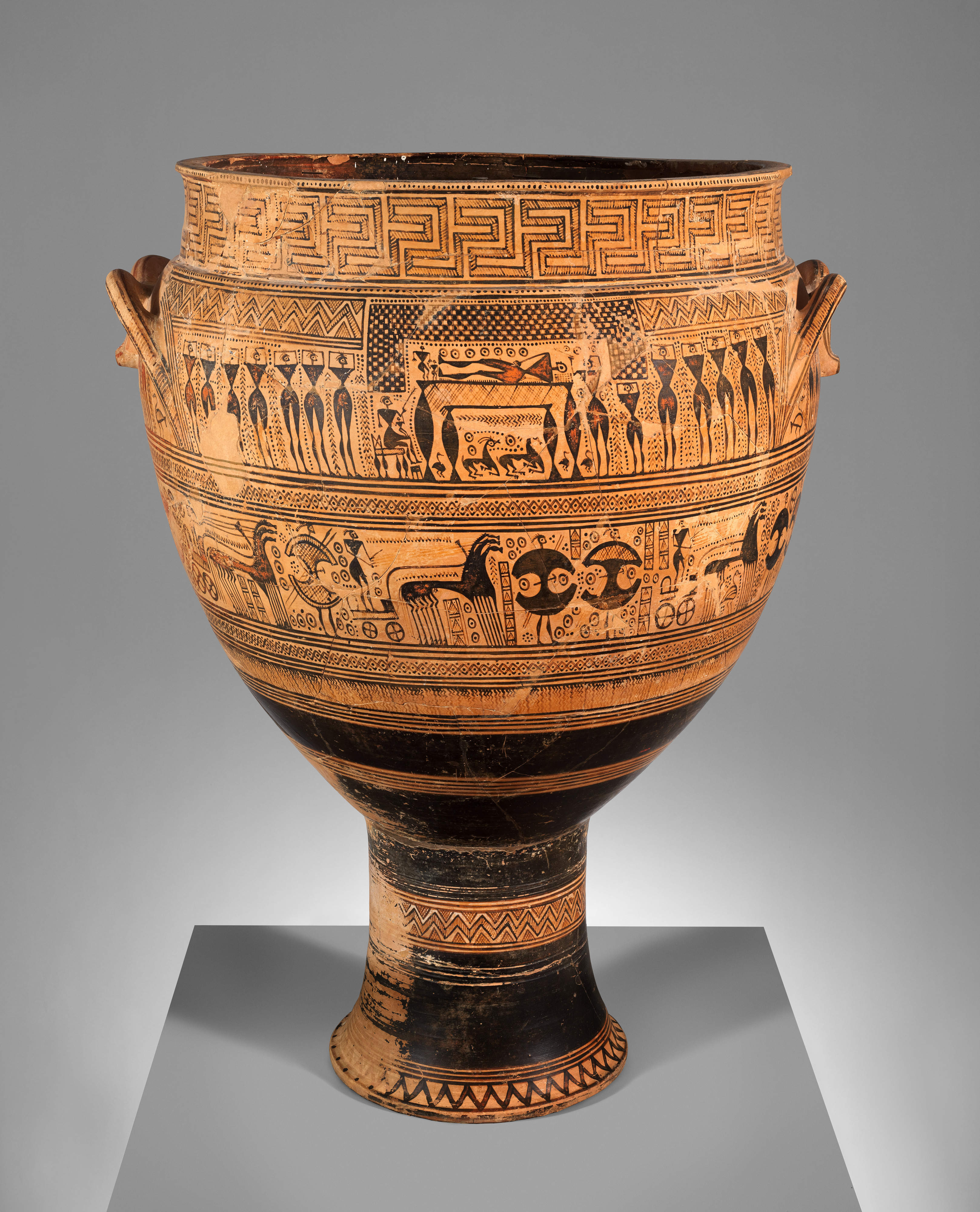
Hirschfeld Workshop — "Terracotta krater" (ca. 750–735 BCE), public domain
The myth of ironclad Greeks.
Every movie and textbook drapes Greek warriors in polished iron armor—heavy, unstoppable, metallic glint. It's the default for any pop culture hoplite, from video games to superhero flicks.
Bronze, not iron, ruled the battlefield.
Real hoplites wore bronze: helmets, breastplates, greaves—coppery, golden, and hand-hammered. Iron was rarer, harder to work, and reserved for weapons. Archaeological digs and vase paintings show the classics: bronze gleaming over white linen and leather.
How did the myth spread?
Early historians confused later Roman ironwork with Greek gear. Iron sounds tougher than bronze—so artists and writers made the Greeks look more like medieval knights. But in Athens, it wasn’t iron that shone on the battlefield.
Most hoplite armor was hammered bronze—crafted for looks and function. Iron helmets and cuirasses were rare and came much later.
