
Greek Temples Were Not Bleached White
You picture Greek temples as dazzling white marble, glowing under the sun. Pure, timeless, and a little sterile. But ancient Athens was a riot of color—statues and columns painted in reds, blues, and golds.
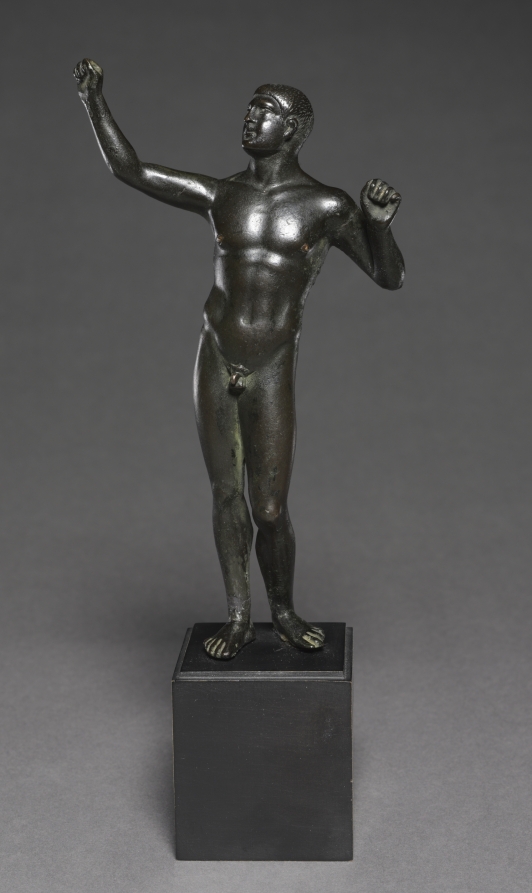
Unknown — "Boxer" (100–30 BCE), CC0
Greek temples: not blank, but blazing.
You picture Greek temples as dazzling white marble, glowing under the sun. Pure, timeless, and a little sterile. But ancient Athens was a riot of color—statues and columns painted in reds, blues, and golds.
Archaeology rewrites the palette.
Archaeologists use UV light and pigment traces to reveal the truth: the Parthenon once blazed with saturated blues, reds, and yellows. Every frieze and statue was painted, sometimes even gilded. The ghostly white marble we see today is just the faded canvas.
Why do we think ‘white’ is classical?
When Renaissance artists dug up ancient ruins, the paint was already gone. They fell in love with the weathered marble and made it the model of 'noble' art. Every textbook since copied the look—and the myth.
Archaeologists use UV light and microscopic pigment traces to reveal the truth: the Parthenon once blazed with saturated colors and intricate patterns. White marble was never the goal—it’s just what remains after centuries of sun and acid rain stripped the paint away.
