
Aelia Eudoxia: The Empress Who Silenced a Saint
Aelia Eudoxia stands before the silver doors of Hagia Sophia—eight months pregnant, she orders the exile of John Chrysostom, the city’s most powerful bishop.
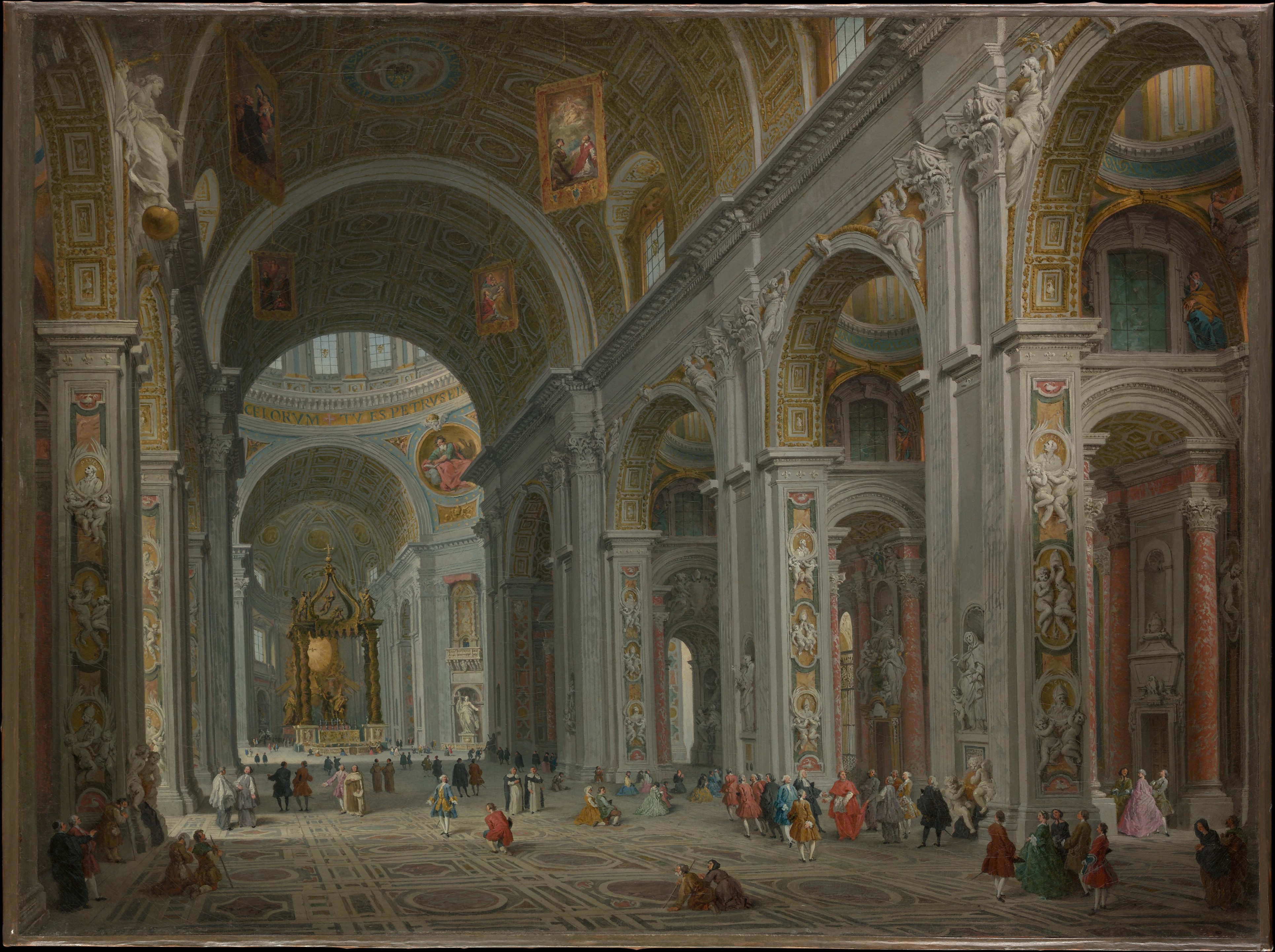
Panini — "Interior of Saint Peter's, Rome" (after 1754), public domain
Pregnant and Powerful
Aelia Eudoxia walks through the heart of Constantinople, her robes trailing gold thread. She’s eight months pregnant when she orders the banishment of John Chrysostom—bishop, orator, and moral gadfly. Few women in Roman history wield such open, decisive power while so visibly expecting an heir.
The Empress Behind the Throne
Eudoxia controls access to the emperor, distributes imperial favors, and turns the patriarch’s allies against him. John calls her a Herodias—a scheming queen on par with biblical villains. He preaches against her luxury from the pulpit. She has him exiled twice, proving her influence in a city obsessed with protocol and piety.
Legacy Written in Marble and Scandal
Eudoxia’s statues watch over Constantinople for decades, outlasting her rivals—even the bishop she banished. She’s remembered not as a meek consort, but as the Augusta who forced the church to bend and showed the city how far a woman’s will could reach.
Eudoxia’s public image shone with piety and charity, but behind the marble walls of Constantinople’s palace, she wielded real power—commanding armies, reshaping the court, and crushing clerics who crossed her. The world called her Augusta. To her enemies, she was untouchable.
