
Demosthenes and the Golden Crown
A nervous orator stands accused of treason—his rival waits to finish him with a single speech.
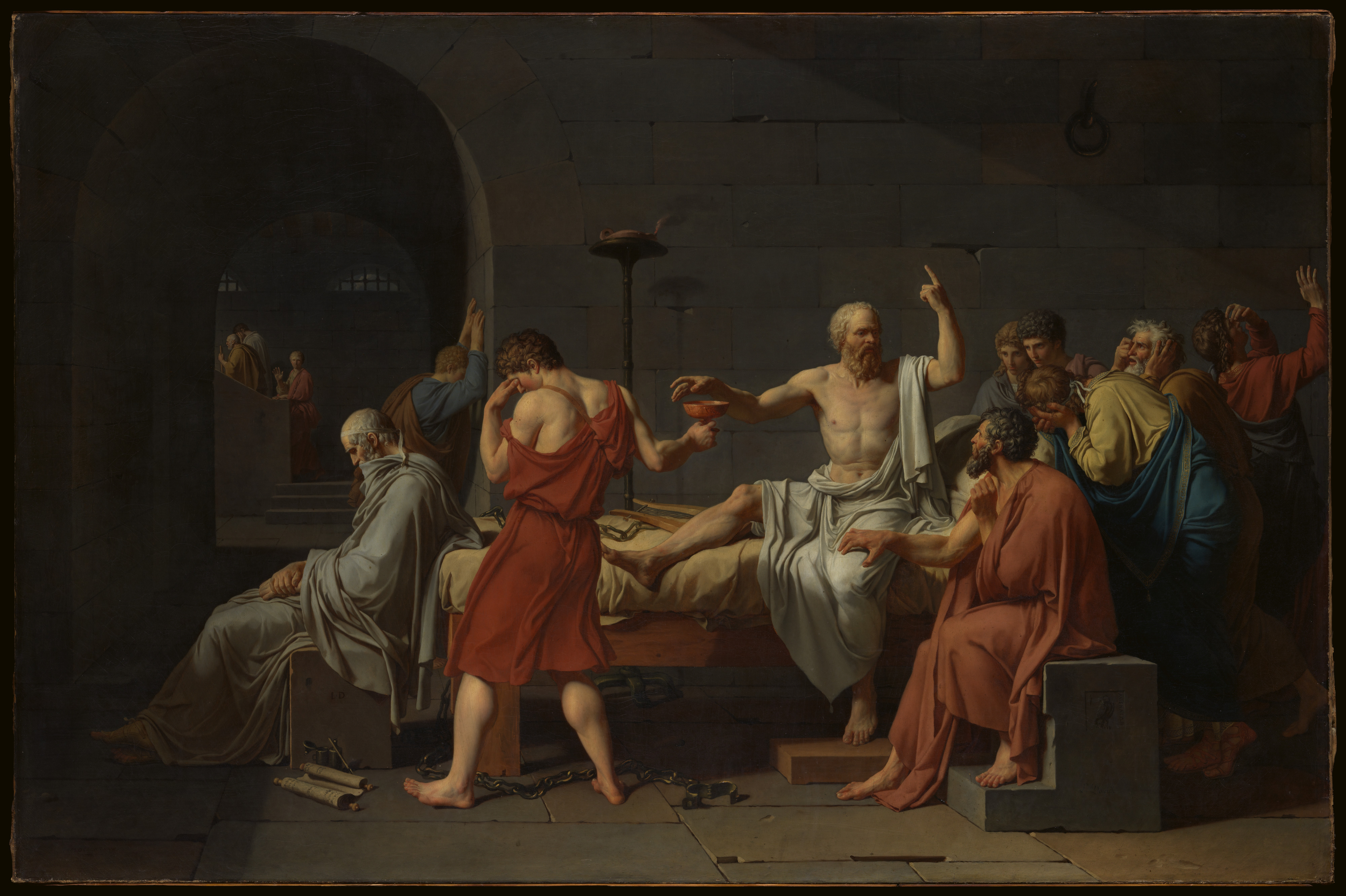
Jacques Louis David — "The Death of Socrates" (1787), public domain
The rivalry erupts in court.
In 330 BC, Athens overflowed as Demosthenes and Aeschines, the city’s sharpest tongues, faced off. Demosthenes was accused of taking bribes and failing Athens against Macedon—a charge close to treason.
A battle of words, not swords.
Aeschines attacked with icy precision. Then Demosthenes rose, voice trembling at first, then soaring. He painted himself as Athens’ last defender. The crowd swayed. In the end, Aeschines was exiled, and Demosthenes crowned with gold.
Sometimes, history is decided by applause.
The speech became the gold standard of political courage. Centuries later, students still read his words—and imagine the roar of the Athenian crowd.
In the courtroom drama of ancient Athens, Demosthenes faced down his enemy Aeschines with words alone—and won not just the case, but immortality as the city’s voice against tyranny.
