
Cleopatra's Calculated Gamble
Cleopatra didn’t just seduce Mark Antony—she sailed up the Cydnus River in a barge gilded with gold, dressed as Aphrodite, her perfumes drifting over the water long before anyone saw her face.
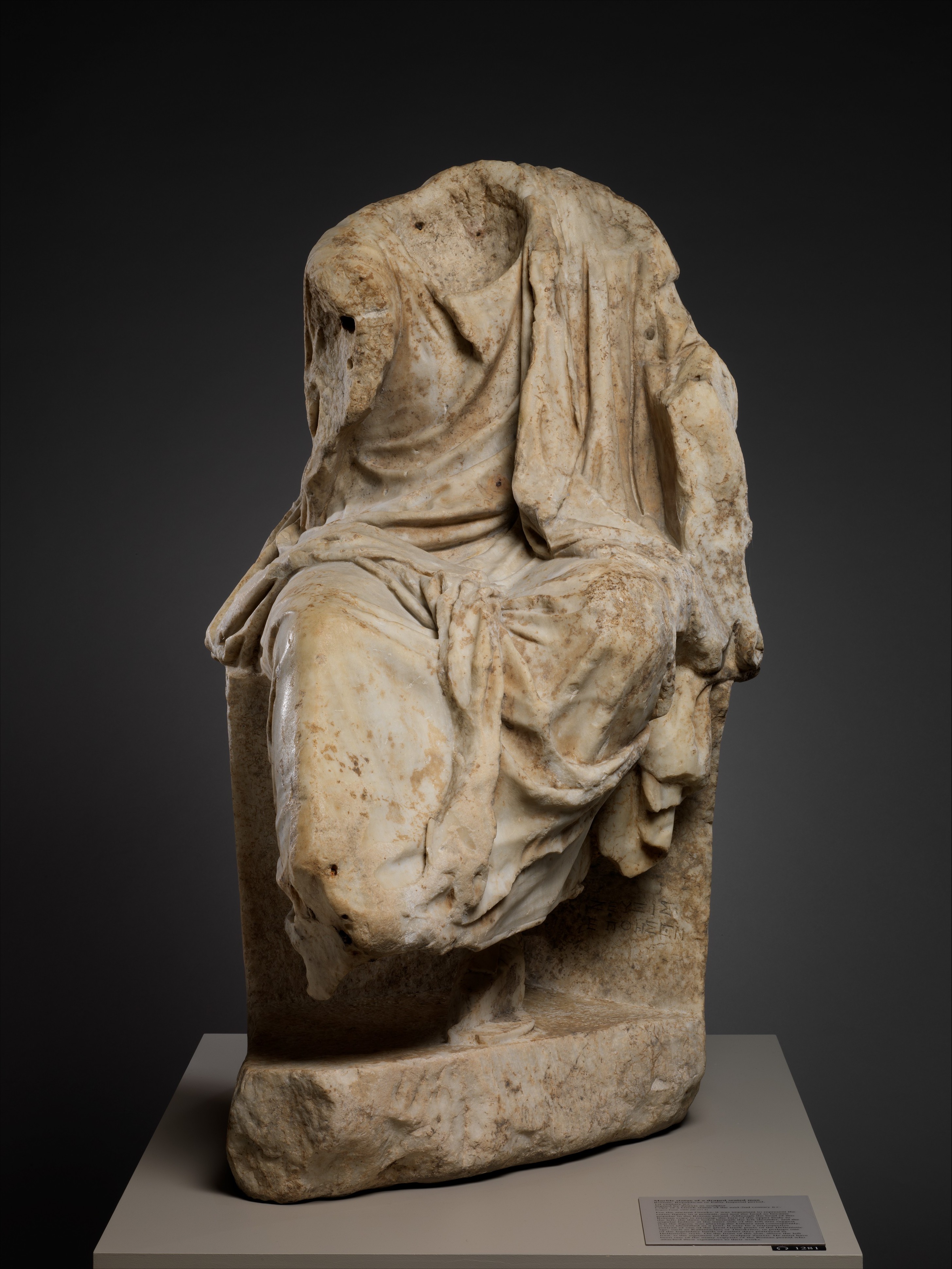
Zeuxis — "Marble statue of a draped seated man" (1st century BCE), public domain
Cleopatra Arrives as a Goddess
She sails into Tarsus on a barge of gold, dressed as Aphrodite. Perfume wafts ahead of her, the crowd stops breathing. Roman generals expect tribute—they get a living legend instead.
Power Through Theater
In a city ruled by iron, Cleopatra confronts Antony with silk and spectacle. Plutarch writes of musicians, rose petals, and attendants disguised as gods. She isn’t playing Rome’s game—she’s rewriting it.
The Price of the Performance
For Rome, Cleopatra’s audacity was both awe and outrage. The gamble worked—then doomed her. Centuries later, the world can’t forget her entrance.
The queen of Egypt understood Rome’s hunger for spectacle and used it better than any senator ever could. When Antony summoned her to Tarsus, she staged her arrival as a living myth, not a supplicant but a goddess. Plutarch describes the stunned citizens lining the banks: Cleopatra, reclining under a golden canopy, surrounded by attendants dressed as cupids, while music and incense spilled into the crowd. In a world where Rome swallowed kingdoms whole, Cleopatra made herself impossible to ignore.
