
Cato the Younger on Integrity
“Not the people, but right actions, ought to move me.” Cato the Younger, in Sallust's Bellum Catilinae, says: «Non me populus, sed recte facta agitare debent.»
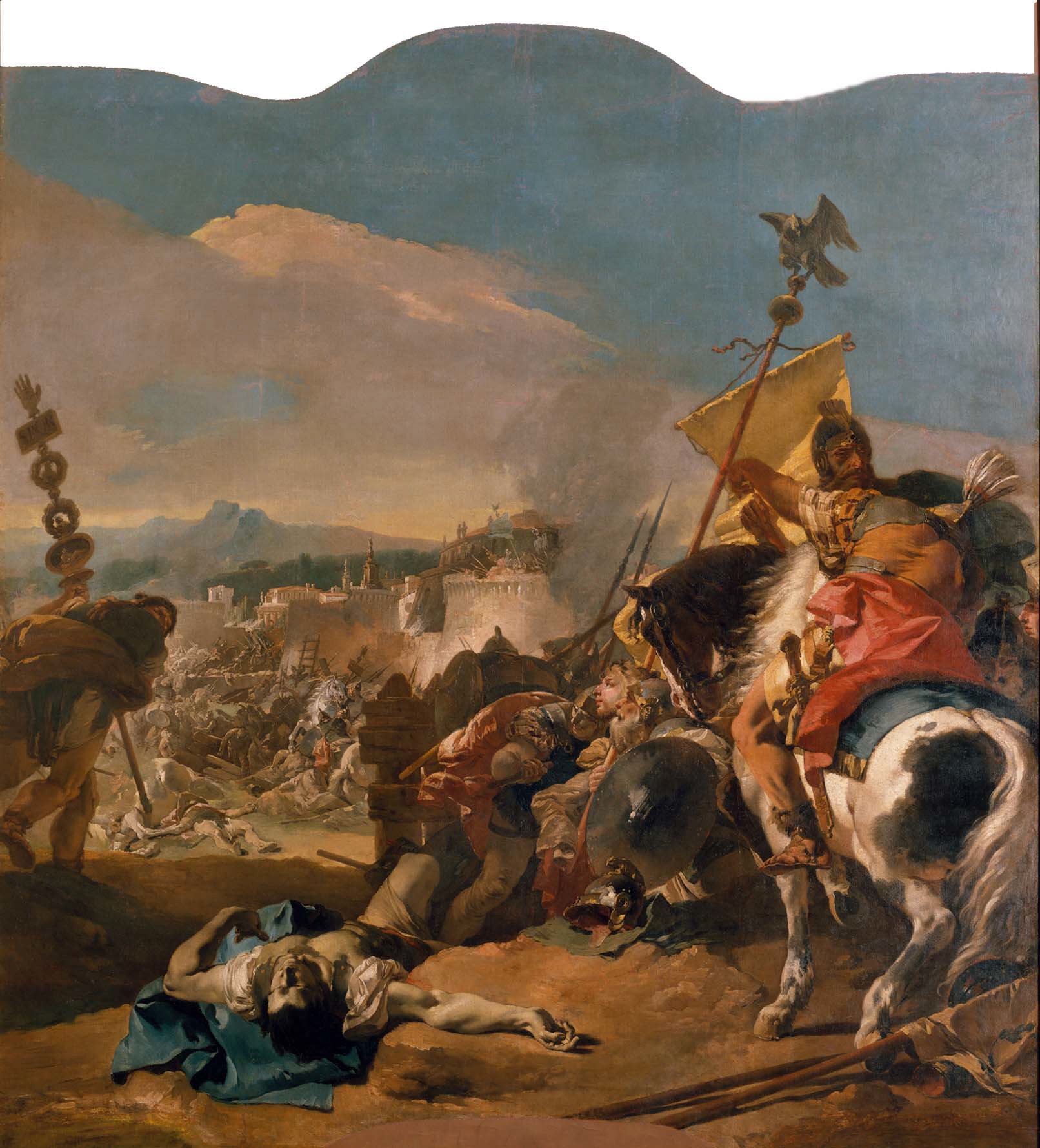
Giovanni Battista Tiepolo — "The Capture of Carthage" (1725–29), public domain
Moved by right, not the mob.
Cato the Younger, in Sallust's Bellum Catilinae (54), says: «Non me populus, sed recte facta agitare debent.» — “Not the people, but right actions, ought to move me.” In a Senate full of actors, Cato stood for stubborn, solitary virtue.
How Cato weaponized integrity.
Cato’s stubbornness was legend — he refused bribes, shunned luxury, and voted alone. For Stoics, your only real audience is yourself. Cato carried that idea to extremes, even when it left him with more enemies than friends.
When your conscience is your only applause.
Cato fought Caesar and lost. He died by his own hand rather than submit. Marcus Aurelius admired him centuries later. Even now, Cato is a reminder: doing right is lonely — but nothing else lasts.
Cato wore his honesty like armor. In an age of corruption and flattery, he scorned the mob and clung to his conscience. For him, being right mattered more than being liked — and he paid the price for it.
