
Cato the Younger: Liberty Over Life
He chose death rather than bow to Caesar.
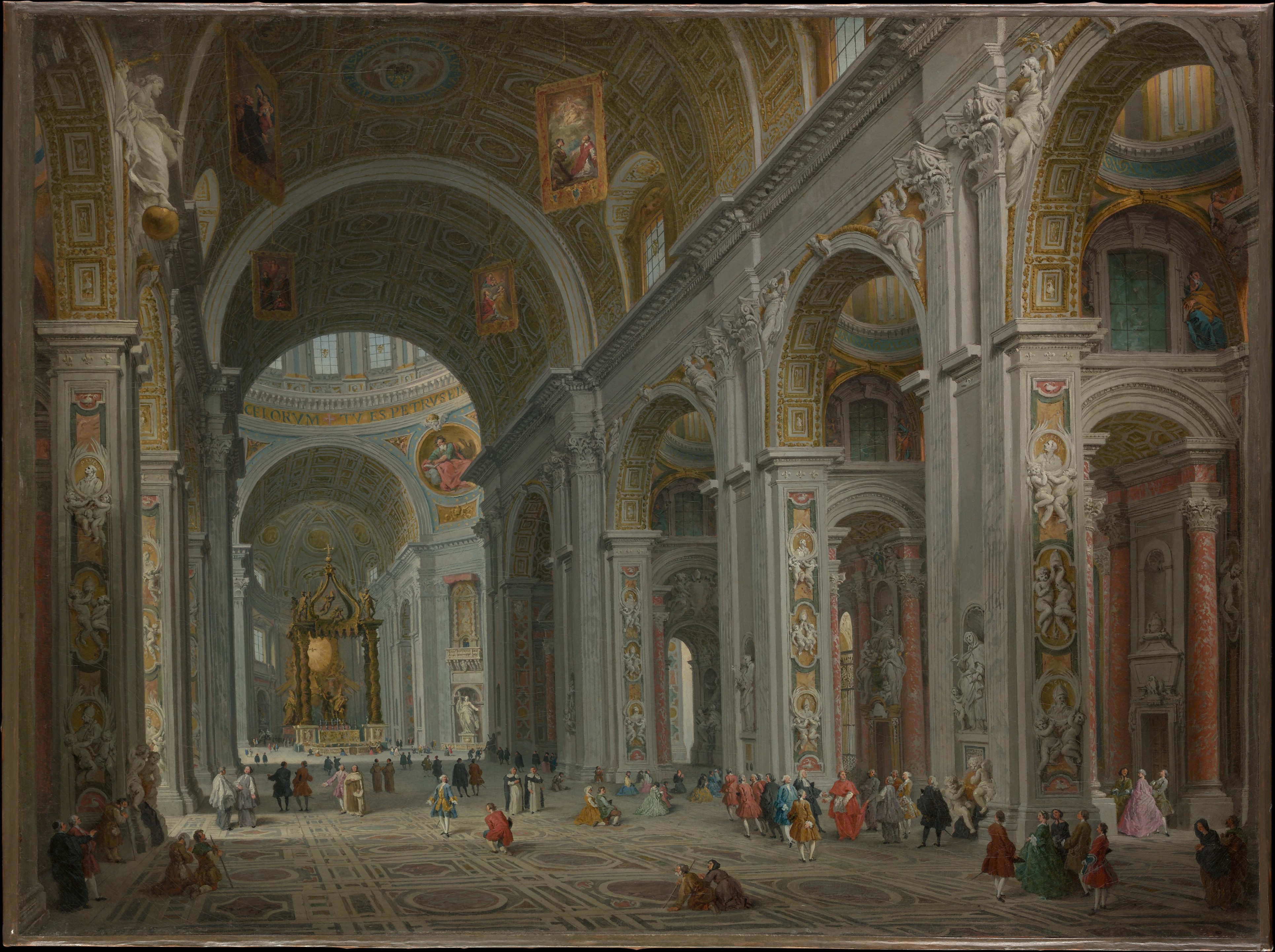
Panini — "Interior of Saint Peter's, Rome" (after 1754), public domain
Death as Protest, Not Escape
When Caesar’s armies closed in, Cato calmly dined, read Plato, and—before dawn—opened his own veins. This wasn’t a private tragedy; it was staged defiance. To Cato, living under Caesar meant betraying everything he believed.
A Last Stand for the Old Republic
Cato’s whole life was a fight for traditional Roman liberty. He was stubborn to the point of self-destruction. While senators made deals, Cato refused every compromise, earning him both admiration and ridicule. Sallust describes his honesty as almost inhuman—or in his words, "unsuited to the times."
Legacy: Martyr or Fool?
To some Romans, Cato became a hero—a symbol of resistance even after the Republic fell. To others, he was an inflexible fanatic whose death changed nothing. Even today, he represents the cost of refusing to bend.
Cato the Younger’s suicide wasn’t just an act of despair—it was a final, stubborn rejection of Julius Caesar’s victory and the end of the Roman Republic.
