
Cato the Younger: Suicide as Protest
Cato rises from his sickbed, tears open his own wound, and dies rather than live under Caesar.
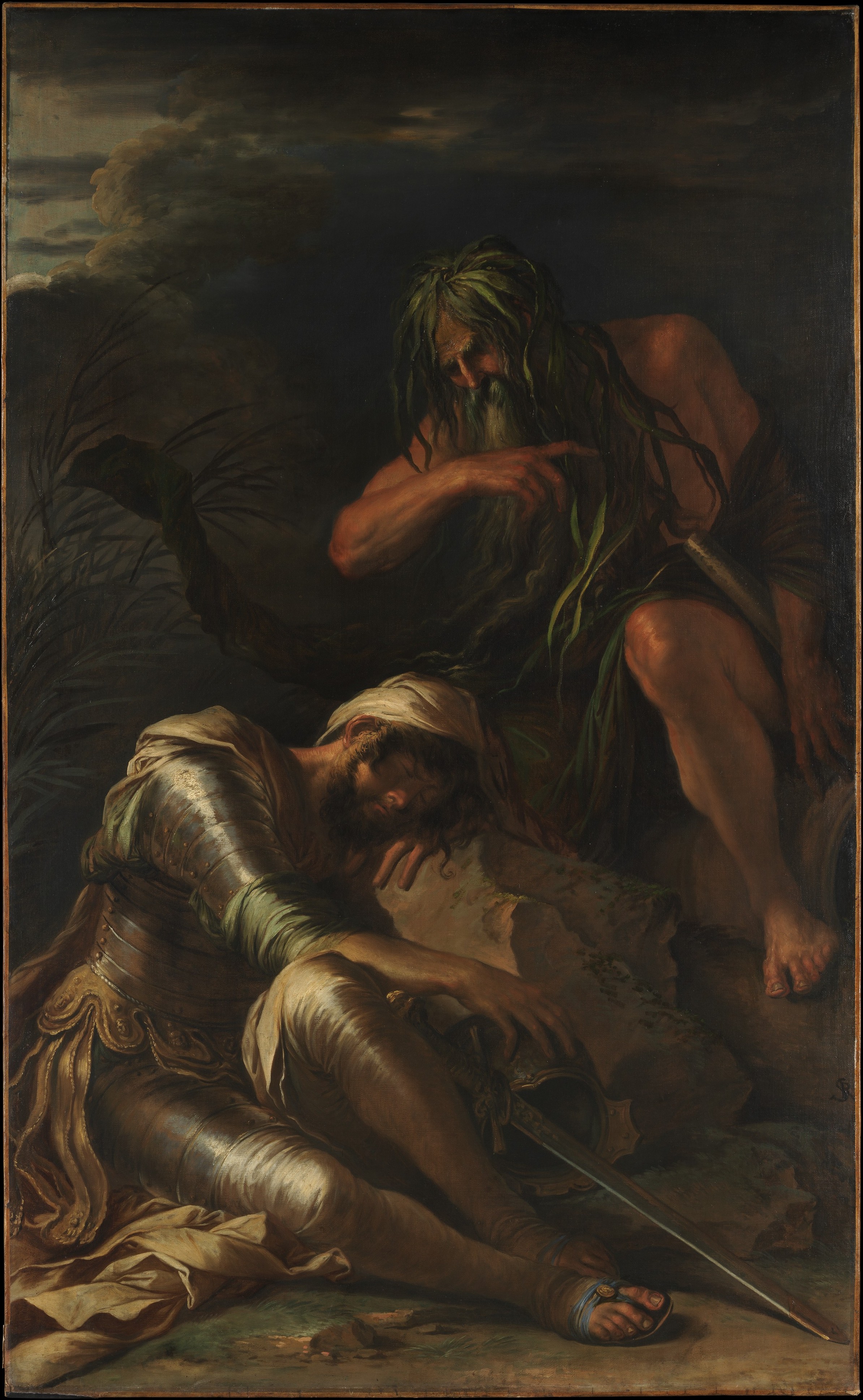
Salvator Rosa — "The Dream of Aeneas" (1660–65), public domain
Death Over Dictatorship
Cato sits alone in Utica, reading Plato by lamplight. Julius Caesar has just won the civil war. Rather than submit, Cato drives his sword into his own belly—then, when doctors try to save him, he rips the stitches open with his bare hands.
A Life of Relentless Principle
In Rome’s chaos, Cato was the immovable object—unyielding, incorruptible, and often impossible. He wore cheap cloak, avoided luxury, and blocked Caesar at every turn, even as the Republic slid into one-man rule.
Even in Death, Divisive
Cato’s suicide split Rome. For some, it was noble—the last gasp of a free Republic. For others, stubbornness that doomed compromise. But the name ‘Cato’ became shorthand for dying, rather than bowing, to power.
To Cato, freedom meant dying on his own terms—even if it meant leaving Rome to its conqueror.
