
Cato's Last Stand at Utica
Cato sits cross-legged, reads Plato, then calmly swallows poison—while Caesar’s legions camp outside his door.
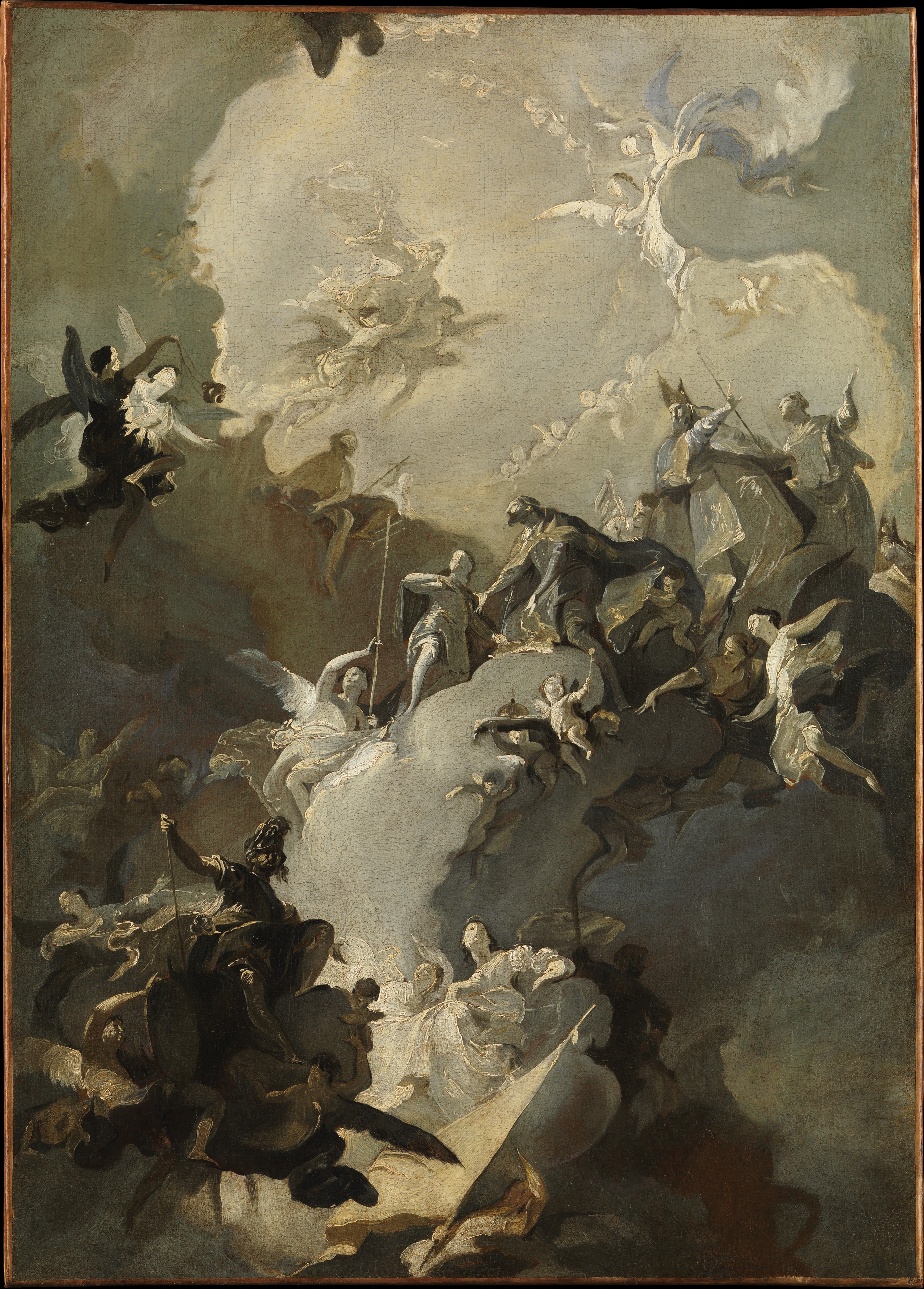
Franz Anton Maulbertsch — "The Glorification of the Royal Hungarian Saints" (ca. 1772–73), public domain
One Last Night of Freedom.
In 46 BC, as Julius Caesar’s victory in the civil war closed the door on the old Republic, Cato the Younger shut himself in his house at Utica. He read Plato’s ‘Phaedo’ by lamplight, then drew his sword—and missed his own heart. Bleeding and furious, he stitched the wound himself.
Stubborn to the End.
When the pain became unbearable, Cato calmly drank poison. Still, his body refused a quiet death—he ripped open his wound with bare hands, refusing to let fate or Caesar decide his end. His defiance made him a symbol, not just of lost liberty, but of what it cost to refuse a tyrant.
Cato chose death over living under a dictator—even when the poison failed to work the first time.
