
On This Day: The Bathing of Pallas Begins
Early June in Athens: statues of Athena are stripped of their armor, veiled, and led to the river for a mysterious bath.
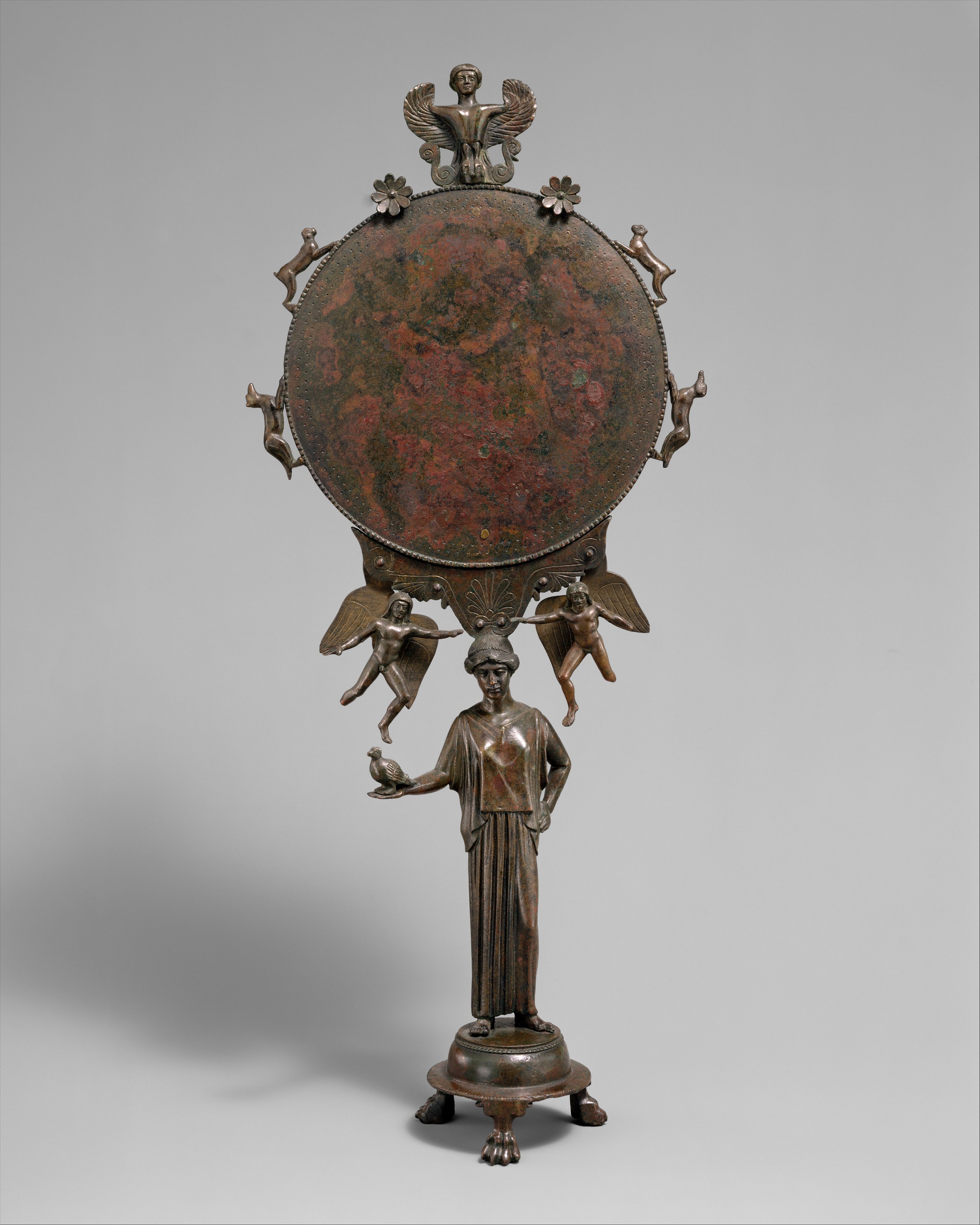
Unknown — "Bronze mirror with a support in the form of a draped woman" (mid-5th century BCE), public domain
Athena’s image, stripped bare and veiled.
Every year in early June, Athenians celebrated the Plynteria. The sacred statue of Athena Polias—protector of the city—was undressed, veiled, and carried to the sea or river for ritual cleansing. For these days, Athens was symbolically unprotected, stripped of its defender.
Days of taboo and uneasy silence.
During the Plynteria, no new business was begun, and the city avoided major decisions. Many Athenians considered this a time of bad luck, the goddess’s power dormant until her image was restored. Even democracy paused, acknowledging that power—political or divine—sometimes needs cleaning.
The Plynteria, one of Athens’ strangest and most secretive festivals, left the city without its goddess for days—exposed, unguarded, and waiting.
