
Aristotle on the Right Kind of Anger
"Anyone can become angry — that is easy. But to be angry with the right person, to the right degree, at the right time…that is not easy." — Aristotle narrows virtue to a razor’s edge.
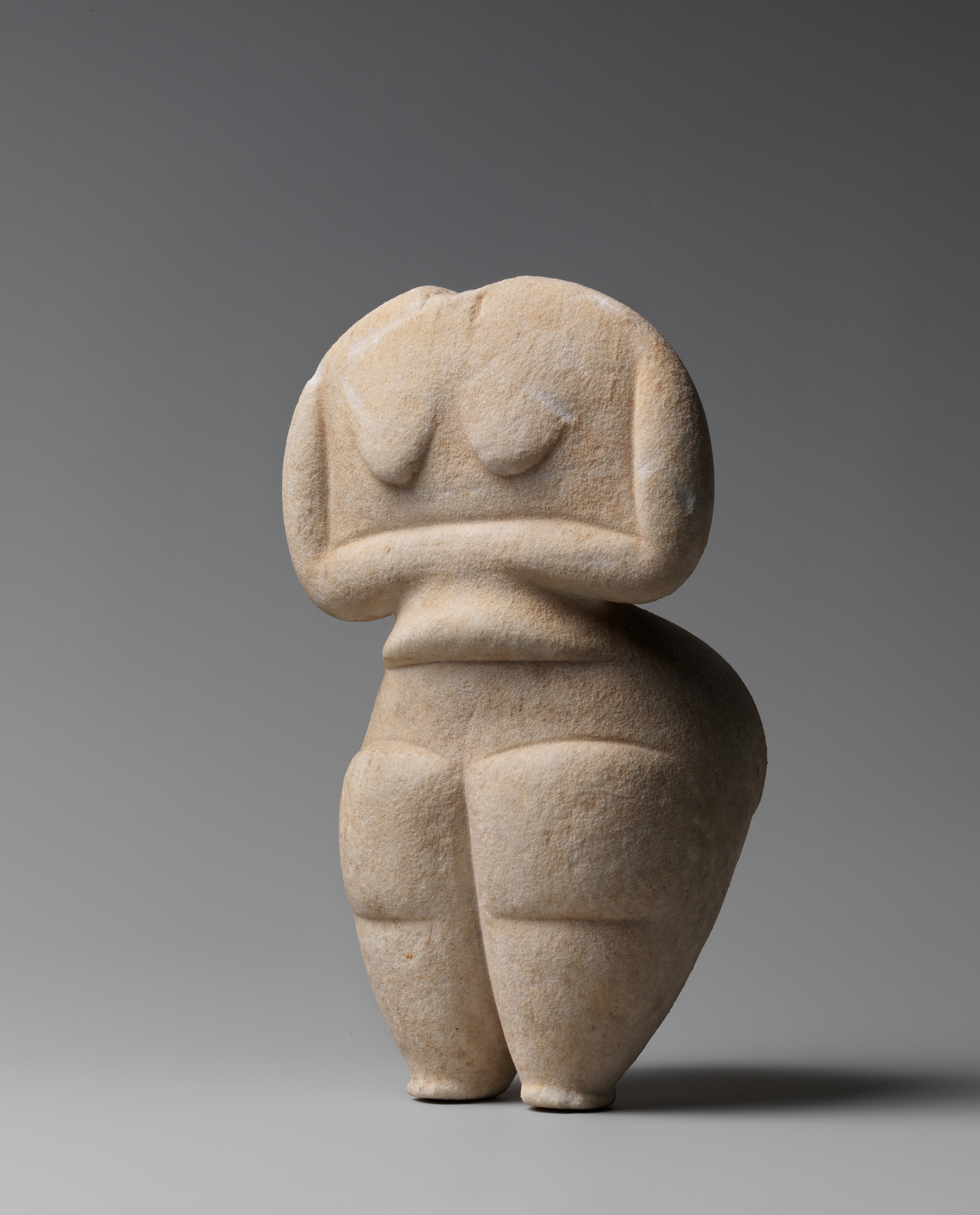
Unknown — "Marble female figure" (4500–4000 BCE), public domain
Aristotle’s scalpel for the soul.
In Nicomachean Ethics, Book II, Aristotle writes: «Ὀργισθῆναι μὲν ῥᾴδιον· τὸ δὲ ὀργισθῆναι πρὸς ὃν δεῖ καὶ ὅτε δεῖ καὶ ὅσου δεῖ καὶ ὡς δεῖ χαλεπόν.» — «Anyone can become angry — that is easy. But to be angry with the right person, to the right degree, at the right time…that is not easy.»
Virtue as a balancing act.
For Aristotle, anger isn’t a vice — losing your head is. Virtue is the art of hitting the mark, never too much or too little. He trains the emotions like a craftsman sharpens a blade: precise, never careless.
The philosopher as field medic.
Aristotle taught Macedonian princes and Athenian citizens, walking the olive groves north of the city. He insisted even kings could lose their tempers — what mattered was learning to aim them.
Aristotle mapped out emotion not to suppress it, but to guide it. Anger isn’t banned in his world — it’s sharpened into a tool, not a tantrum.
