
Archimedes and the Fall of Syracuse
Rome stormed the city — and killed the greatest mind in the Greek world over a math problem drawn in the sand.
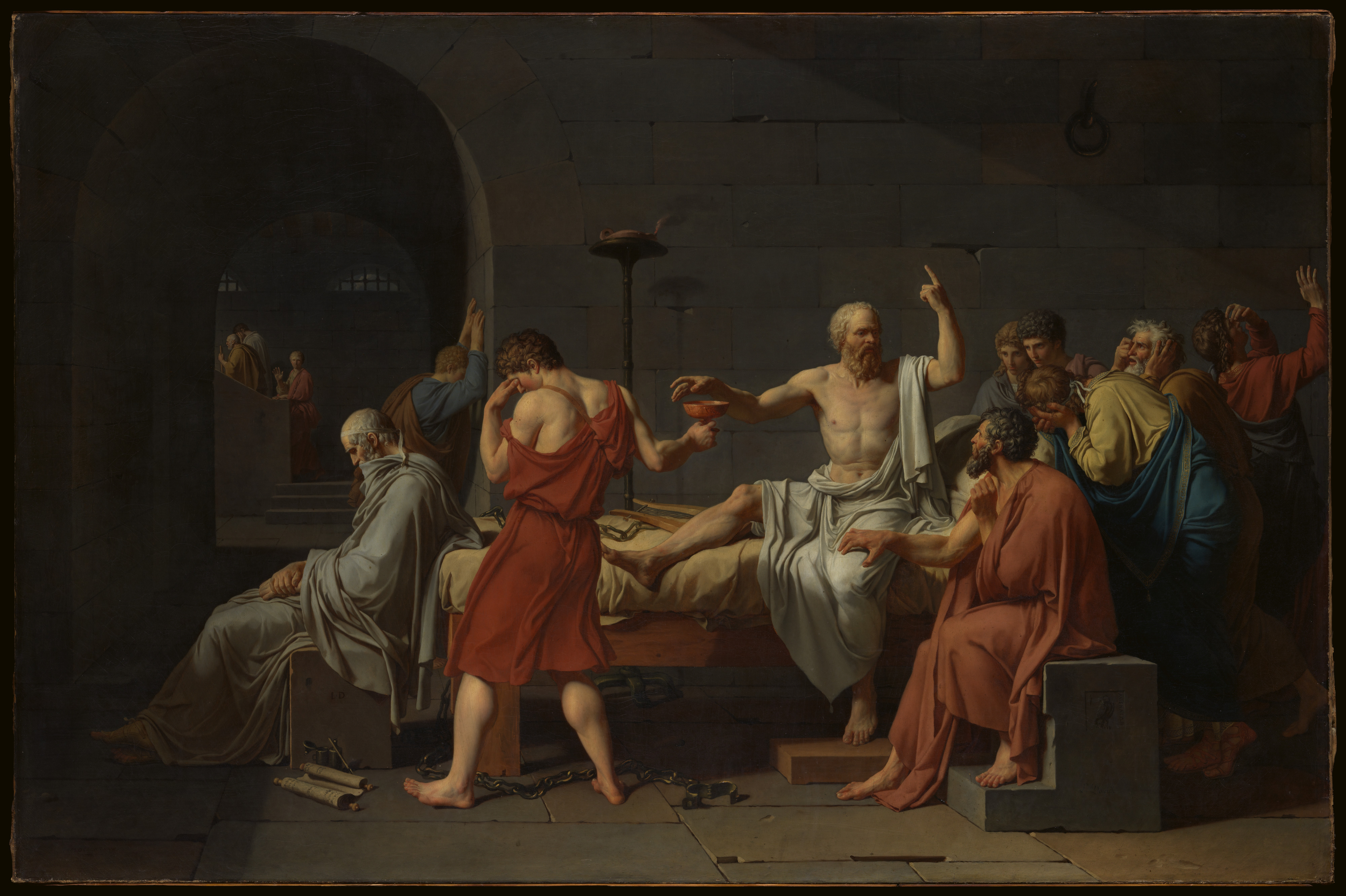
Jacques Louis David — "The Death of Socrates" (1787), public domain
The siege that ended a genius.
In 212 BC, as the Romans breached Syracuse’s walls after a brutal two-year siege, the city’s most famous resident — Archimedes — was hunched over, scribbling diagrams in dust. For years, his inventions had held off Roman attacks: giant claws, mirrors that allegedly set ships on fire, war machines that belonged in wildest fiction.
'Do not disturb my circles.'
As the story goes (told by Plutarch and others), a Roman soldier burst in and ordered Archimedes to come with him. The 75-year-old refused, pleading to finish his geometry. The soldier cut him down on the spot. Rome had its victory — but lost the man who could defend a city with math.
From legend to legacy.
The tale’s details are likely embellished. But Archimedes’ death marked the passing of the Old Greek world into Rome’s hands. His name became shorthand for genius — and for the idea that a single mind, even in crisis, might shape the fate of cities.
As Roman soldiers sacked Syracuse, Archimedes was deep in thought. Legend says he refused to leave his equations — and paid for it with his life.
