
On This Day: The Miniscule Races for Hera
April in Argos: Girls sprinted barefoot in tunics just above the knee, chasing honor at Hera’s ancient stadium.
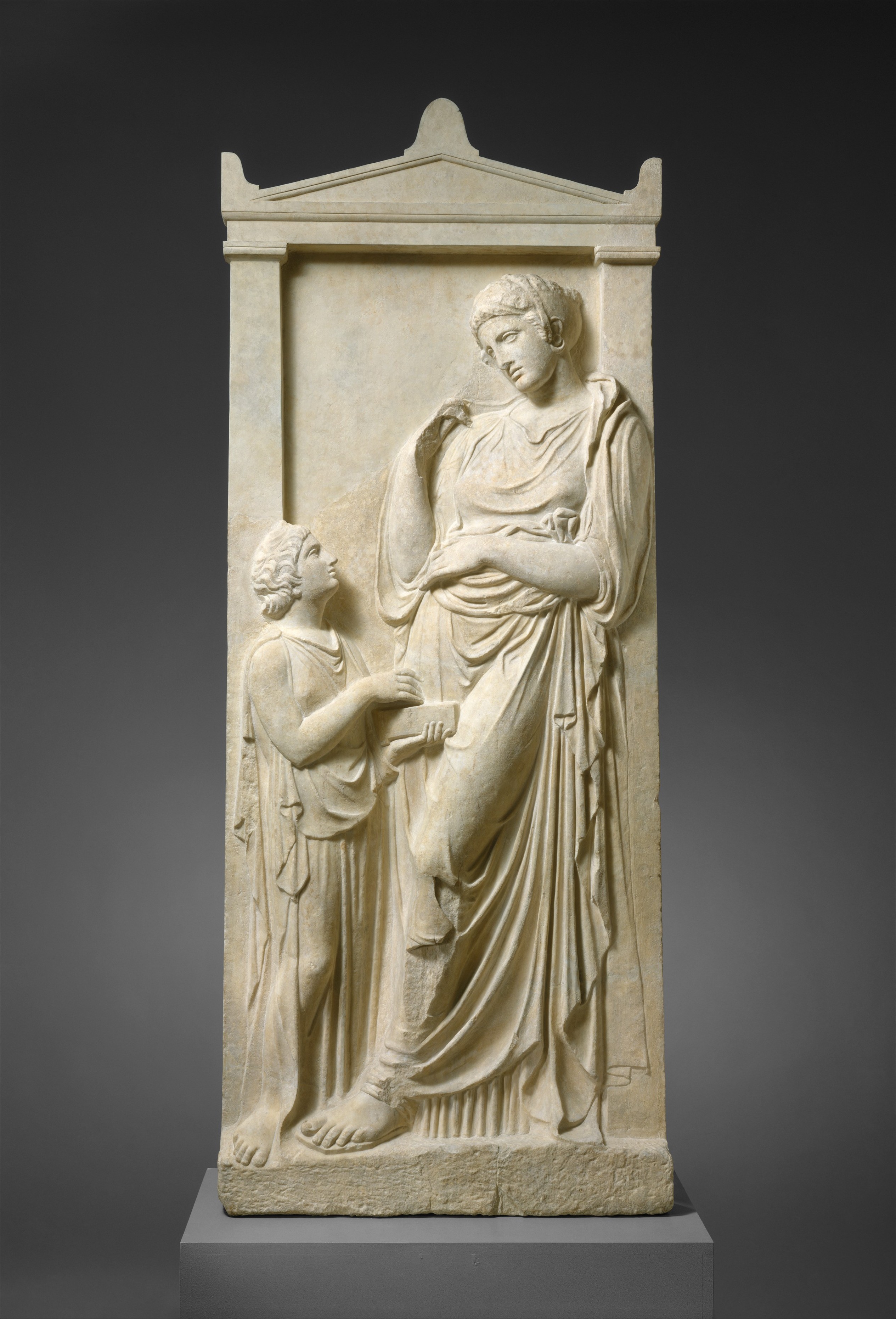
Unknown — "Marble grave stele of a young woman and servant" (ca. 400–390 BCE), public domain
Girls racing at the temple of Hera.
Each spring, young women of Argos gathered at the Heraeum—one of Greece’s oldest temples—to race in honor of the goddess Hera. Unlike Olympian athletes, they ran with hair loose, clad in short chitons, their feet pounding bare earth. Ancient sources mark this as one of the rare public rites where girls displayed competitive skill.
Victory meant more than a wreath.
Winners received olive crowns and the right to dedicate statues—a privilege usually reserved for men. The Heraia offered a sanctioned moment for female strength and community, hinting at older traditions where women played visible roles in civic and religious life. Our glimpses come from fragments: Pausanias describes the races, but much remains lost, leaving the ritual shrouded in spring mist.
The Heraia—held in early spring—let young women compete for olive wreaths at the legendary Heraeum, revealing a rare glimpse of female athleticism and ritual in archaic Greece.
