
The First Umbrellas Were for Greek Women
In crowded Athenian streets, parasols bloom like white flowers—but only above women’s heads.
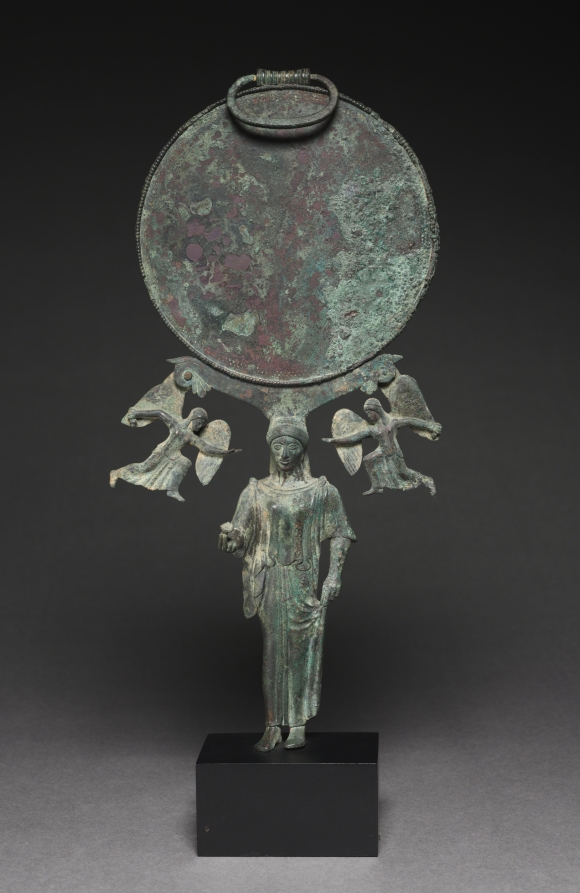
Unknown — "Mirror" (c. 470–460 BCE), CC0
A Sea of Parasols in Athens
In crowded Athenian streets, parasols bloom like white flowers—but only above women’s heads. Men considered them off-limits, a symbol of femininity and luxury.
Greek Umbrellas: Status, Not Rain
The skiadeion, an early umbrella, wasn’t for storms at all—Greek women carried them to protect fair skin from the sun. Vase paintings from the 5th century BCE show maidens holding parasols at festivals and weddings. For a man to use one would be a social faux pas.
Long before Londoners carried umbrellas for rain, fashionable Greek women used parasols (skiadeion) for shade. Men considered it unmanly to carry one—parasols meant feminine status and elite leisure. Painted vases show them in processions, shielding pale skin from the Mediterranean sun. The umbrella, in Greece, started as a mark of privilege, not practicality.
