
Alexander Survives the Granicus River
Alexander waded into the Granicus River, spear in hand—to find himself surrounded and nearly killed in the mud.
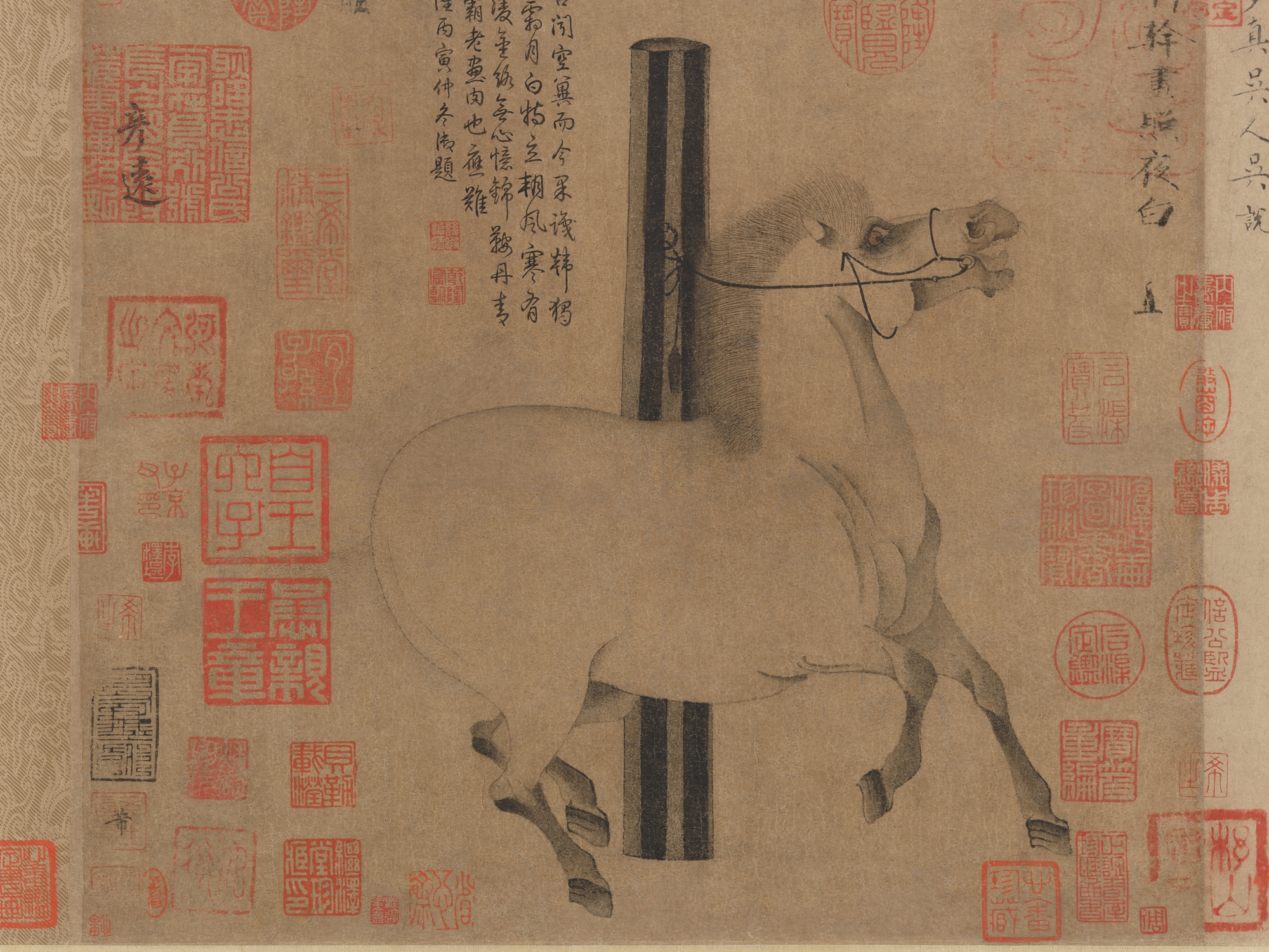
Han Gan — "Night-Shining White" (ca. 750), public domain
Melee in the River Mud.
Alexander led his cavalry straight into the icy waters of the Granicus. Persian horsemen waited on the far bank, hurling javelins while he scrambled up the slope. Suddenly, Alexander was surrounded—cut off from his bodyguards, locked in with enemy nobles.
A blade nearly ends an empire.
A Persian named Spithridates swung his axe at Alexander’s unprotected head. The blow crashed against Alexander’s helmet, knocking him senseless, but the blade didn’t bite through. Another Persian raised his sword for the kill—then Cleitus the Black appeared, severing the attacker’s arm before it landed. Alexander staggered up, helmet dented, face streaming blood.
History pivots on a split second.
Had that axe landed true, the ambitions of the Macedonian king—and the shape of two continents—might have drowned in that river. But Alexander stood, rallied his men, and the rest is legend.
For a split second, the course of world history hung on whether a Persian axe would split Alexander’s helmet. He survived, battered and bloodied, to change everything.
