
Alcibiades and the Mutilation of the Herms
Statues across Athens woke up without noses, genitals, or faces—chiseled off in a single night of chaos.
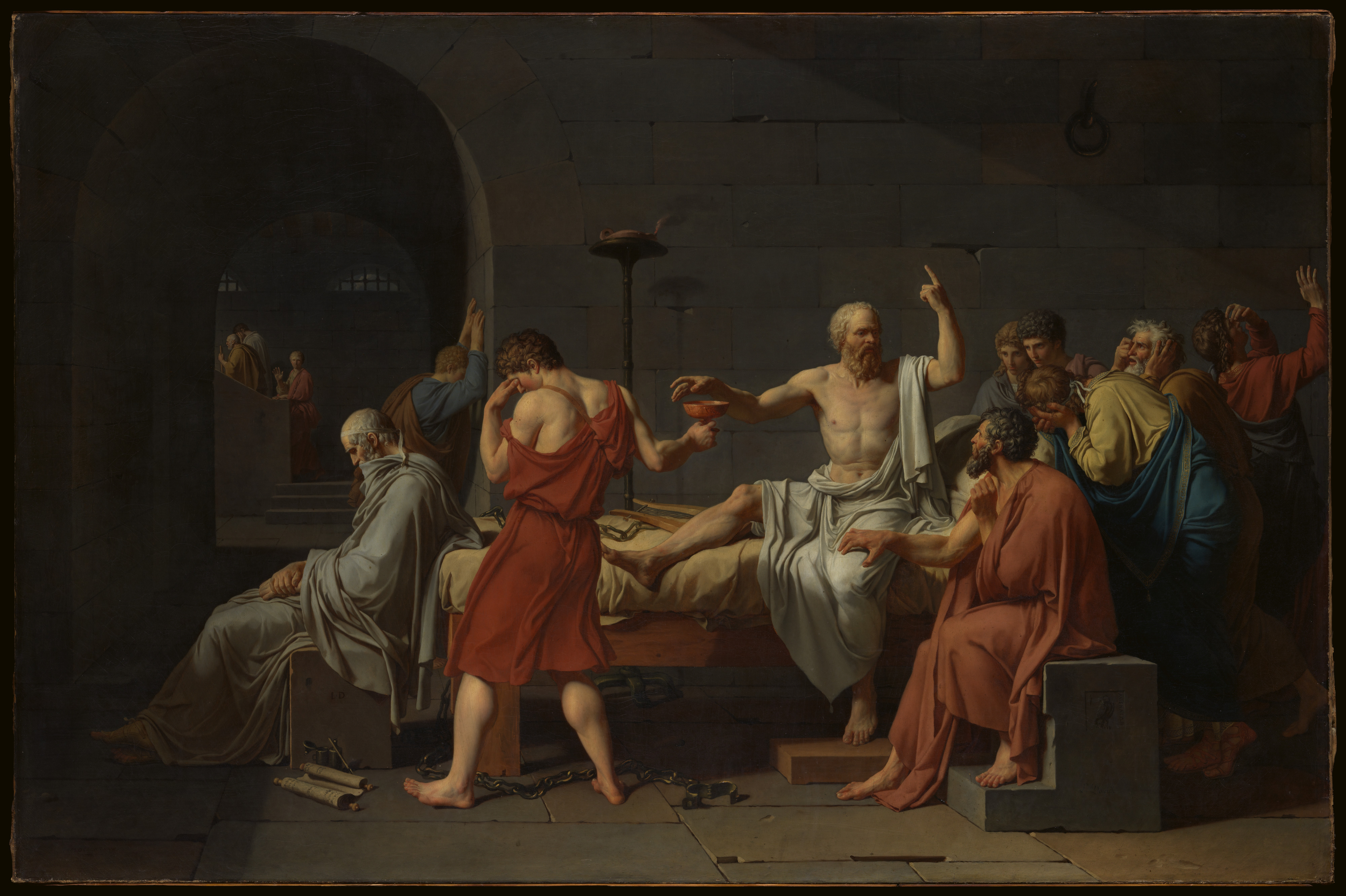
David — "The Death of Socrates" (1787), public domain
A night of shattered faces.
On the eve of Athens’ Sicilian expedition, vandals swept through the city, hacking the stone faces off hundreds of sacred Herm statues—blocky pillars with bearded heads and erect genitals. It was a citywide act of sacrilege, impossible to miss by dawn.
Paranoia takes over Athens.
Panic shot through the city. The mutilation felt like an omen—a sign someone was sabotaging Athens from within. Suspicion landed hard on Alcibiades, the city’s most dazzling (and divisive) general. Rivals accused him of laughing at the gods, and suddenly, his entire command—and life—hung by a thread.
Exile, not glory.
Summoned home to stand trial in the middle of his campaign, Alcibiades vanished instead—defecting to Sparta. The man who should have conquered Sicily helped crush his own city. All because of one night’s broken stone and broken trust.
The city’s shock turned to paranoia. Alcibiades, poised to lead the greatest expedition of his life, suddenly found himself accused of sacrilege and forced into exile—changing the fate of Athens’ empire.
