
Aegeus, the Father Who Waited
A king kneels at the edge of the Athenian cliffs, eyes straining for a ship’s sail—white or black. The wrong color and his only son is dead.
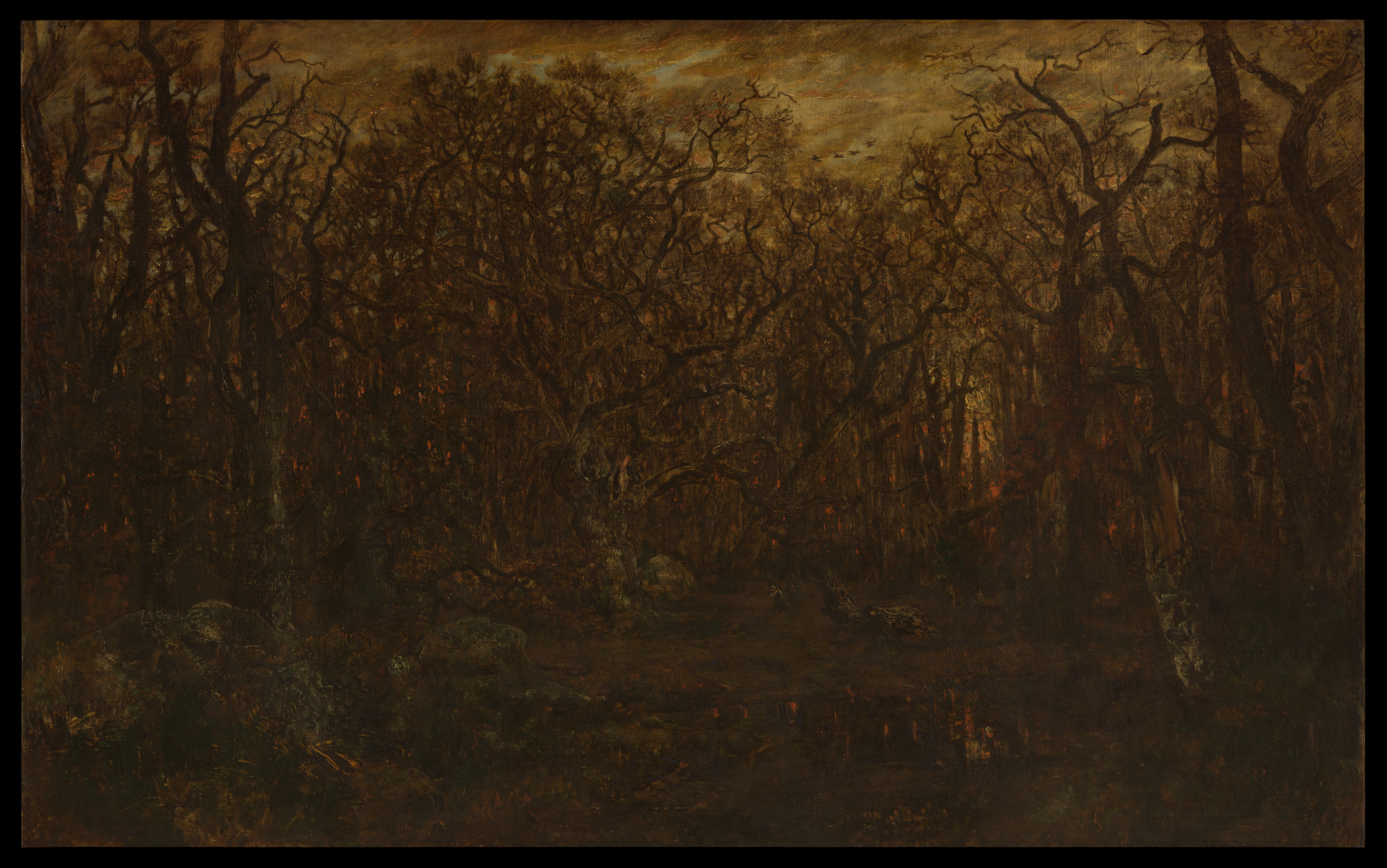
Théodore Rousseau — "The Forest in Winter at Sunset" (ca. 1846–67), public domain
King Waiting on a Cliff
Aegeus stands on the rocky heights above Athens, searching the sea for his son’s return. One color of sail means a living heir, the other spells disaster. The difference is a single scrap of fabric.
A Symbol Written in Stone and Sail
Aegeus hid his hopes and legacy for Theseus under a boulder—if the boy could lift it, he’d earn his name. But even kings can’t predict memory or fate. Theseus forgets the signal. The sea below takes its name from the king’s final leap.
Fathers, Sons, and Accidents of Memory
For all their power, rulers are still at the mercy of small mistakes. Sometimes, an empire’s future turns on something as fragile as a forgotten flag.
Aegeus ruled Athens in an age before certainty. He left his newborn son, Theseus, a sword and sandals under a rock—legacy hidden, hope deferred. The code: if you’re strong enough to lift the stone, you’re worthy to claim your birthright. Years later, Aegeus only learns his fate by the color of a sail on the horizon. Theseus forgets to hoist the white, and the king’s grief becomes myth: he leaps into the sea, which still bears his name.
