
Did Tunic Length Mark Male or Female?
You picture Roman men in knee-length tunics and women sweeping the ground with theirs. But the real story is more tangled—and gendered hemlines were not a strict rule.
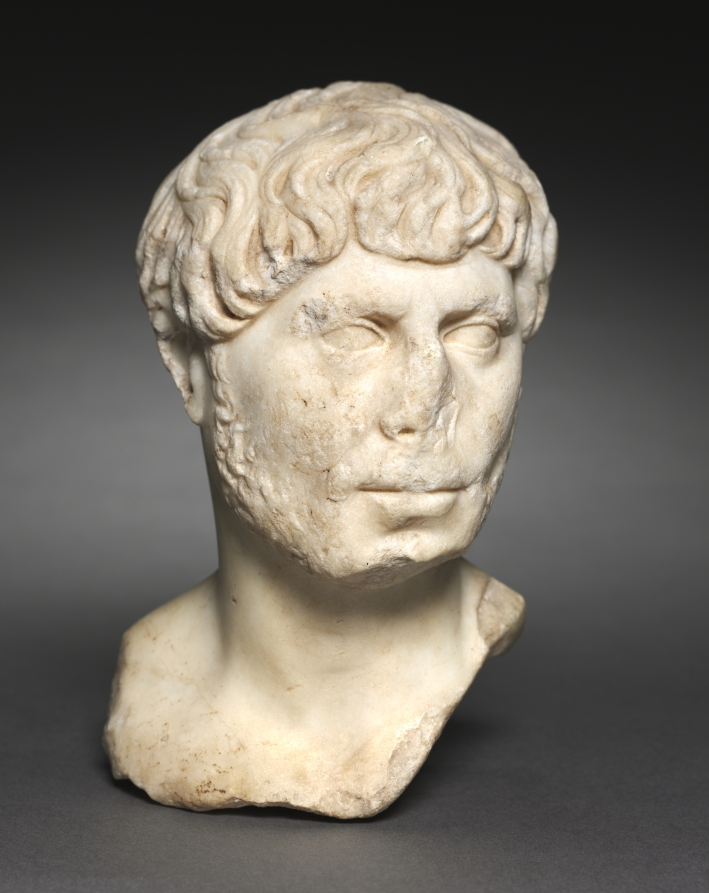
Unknown — "Head of a Bearded Man" (c. 125 CE), CC0
Tunics told you who?
You might think: in Rome, a tunic's length told you everything. Men wore them to the knees; women dragged the floor. It's in the costume guides and half the museum dioramas. But it's a historical oversimplification—and sometimes, dead wrong.
Tunics came in all shapes.
Art from Pompeii, mosaics, and Roman statues show women in short tunics when exercising, working, or at home—bare calves and all. Men sometimes donned long tunics for priestly duties, mourning, or when rank demanded it. Tunic choices were fluid, changing with fashion, function, and status.
Why the myth stuck.
Early archaeologists and Victorian artists wanted Rome to look tidy—clear visual codes, two neat genders, no ambiguity. Modern pop culture picked up the formula and ran with it. The actual Romans wore what worked.
Tunics in Rome were a blur of lengths and styles, shaped by class, occupation, region, and fashion as much as gender. Literary and visual evidence shows women in short tunics for work or athletics, and even men sometimes wore long tunics in certain ceremonies or roles.
