
Xerxes and the Whipping of the Hellespont
Persian soldiers whipped the sea—fifty lashes to punish the waves for destroying Xerxes’ bridge.
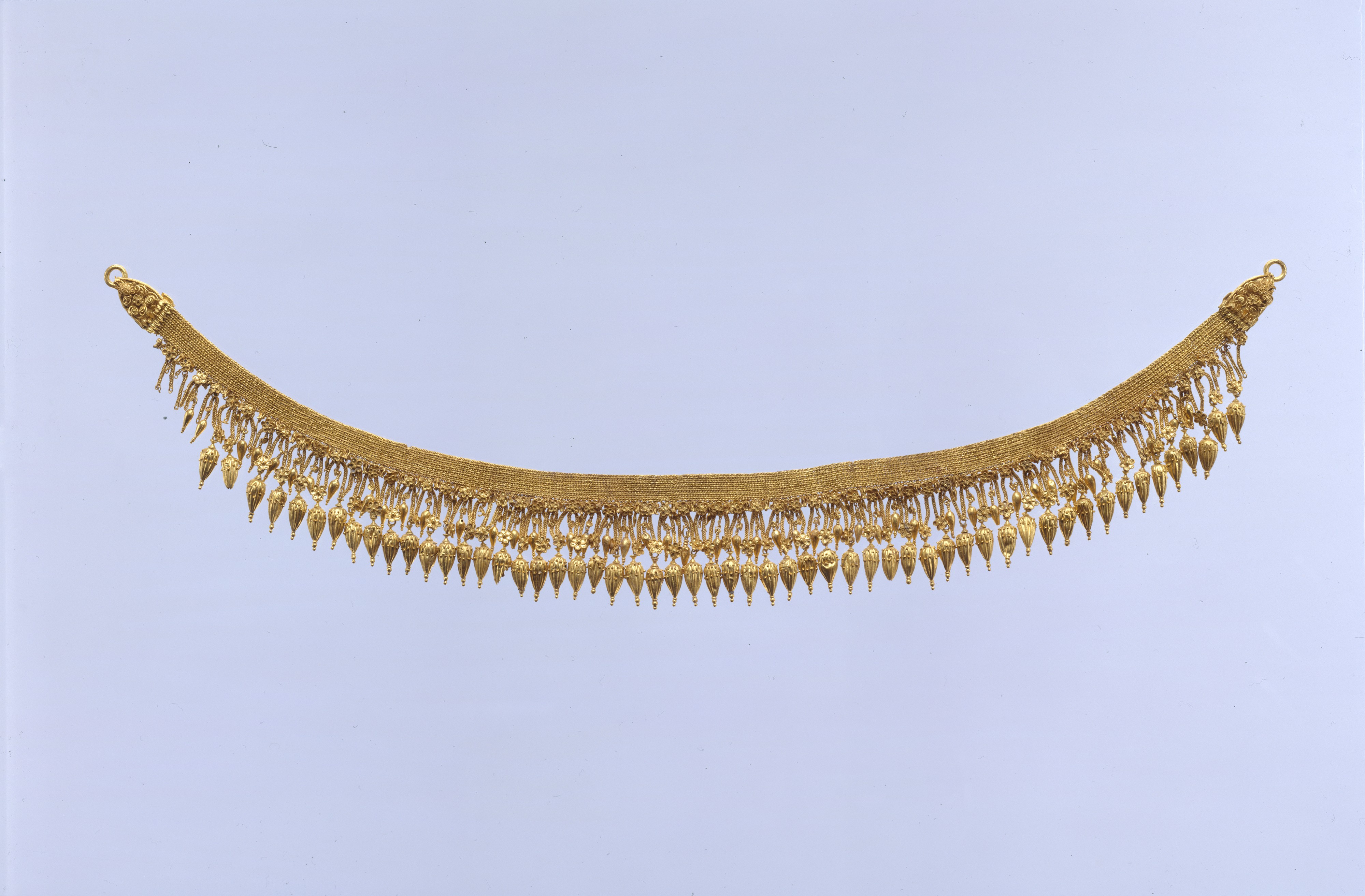
Unknown — "Gold strap necklace with seedlike pendants" (ca. 330–300 BCE), public domain
The sea does not obey.
In 480 BC, Xerxes ordered two enormous bridges built across the Hellespont to invade Greece. A storm snapped the cables, scattering wood and rope like toys. Furious, Xerxes ordered his men to whip the sea with fifty lashes—and hurl chains and hot irons into the water, as if punishing a disobedient slave.
Rage and ritual on the shore.
According to Herodotus, the Persian king cursed the waves, demanding they submit to Persian rule. His engineers faced an even harsher punishment—beheading. Only after this spectacle did Xerxes order the bridges rebuilt, turning humiliation into a show of absolute power.
A tyrant’s tantrum doesn’t calm the sea.
Bridges were rebuilt, but Xerxes’ fury remained a cautionary tale. No king, however grand, could truly command the wind and water. His lashing of the sea rippled through Greek memory as proof that hubris could be as laughable as it was terrifying.
Xerxes' rage against the elements shows how even the mightiest rulers can be humbled by nature—and can respond with sheer, theatrical fury.
