
Sophocles on the Terror and Grace of Humans
"Wonders are many, and none is more wonderful than man." — Sophocles, Antigone, line 332, marvels at human power and peril.
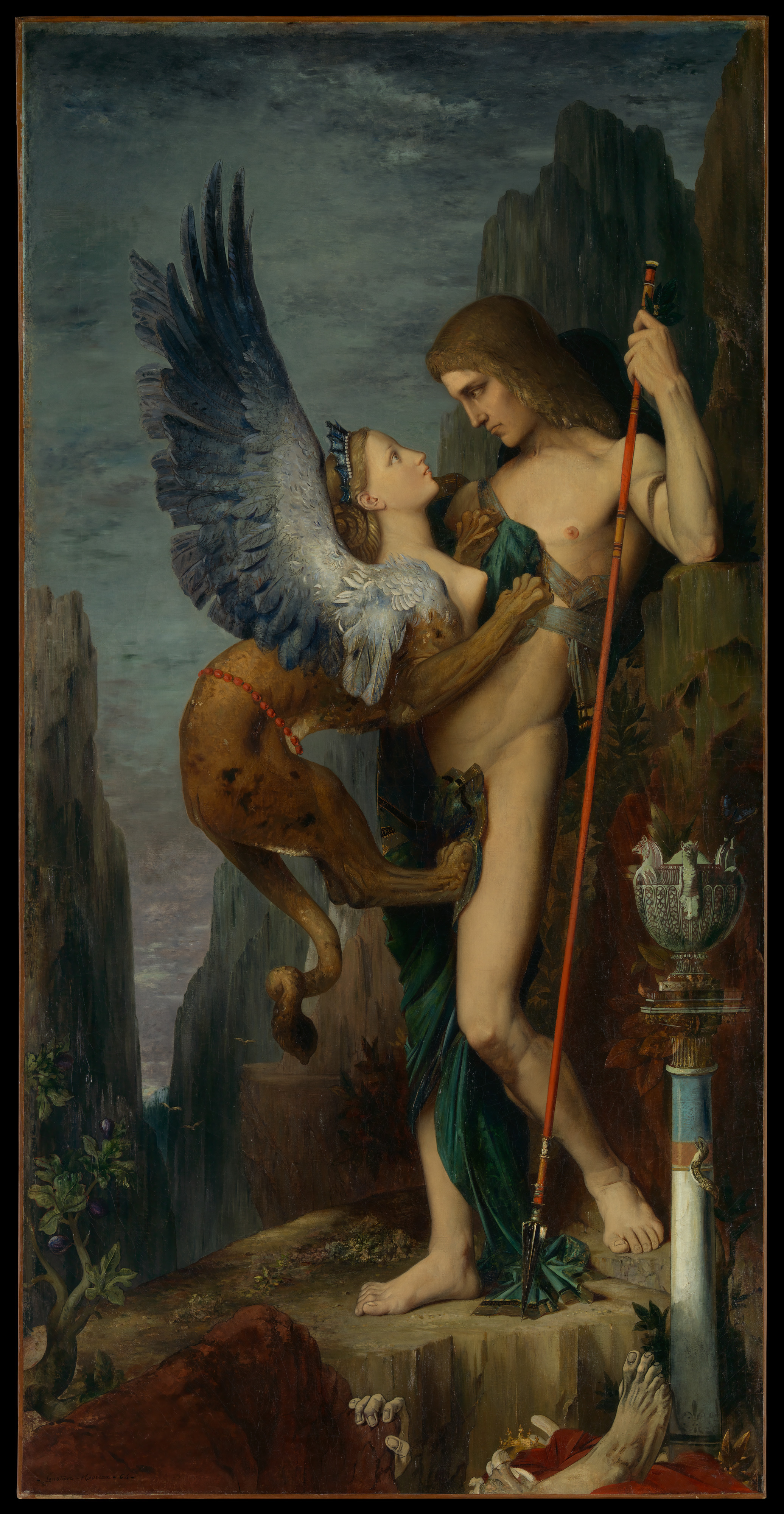
Gustave Moreau — "Oedipus and the Sphinx" (1864), public domain
The wonder and danger of humanity.
"Wonders are many, and none is more wonderful than man." Sophocles puts these words in the mouth of the chorus in Antigone, line 332 (written c. 441 BC), as they reflect on all mankind has mastered — the sea, the land, the mind — and the unpredictable powers that come with it.
A chorus that still sings.
The line’s double edge is sharp. The same capacity for greatness gives humans the power to destroy — families, cities, themselves. In Antigone, that hubris leads to tragedy, as mortal law collides with divine order and the cost is paid in blood.
This iconic chorus from Antigone captures both awe and anxiety at what mortals can achieve — and what lines they might cross.
