
Were Roman Cities Built from Gleaming Marble?
You picture ancient Rome shining in endless white marble—columns, temples, palaces, all dazzling in the sun. That’s a Hollywood fantasy.
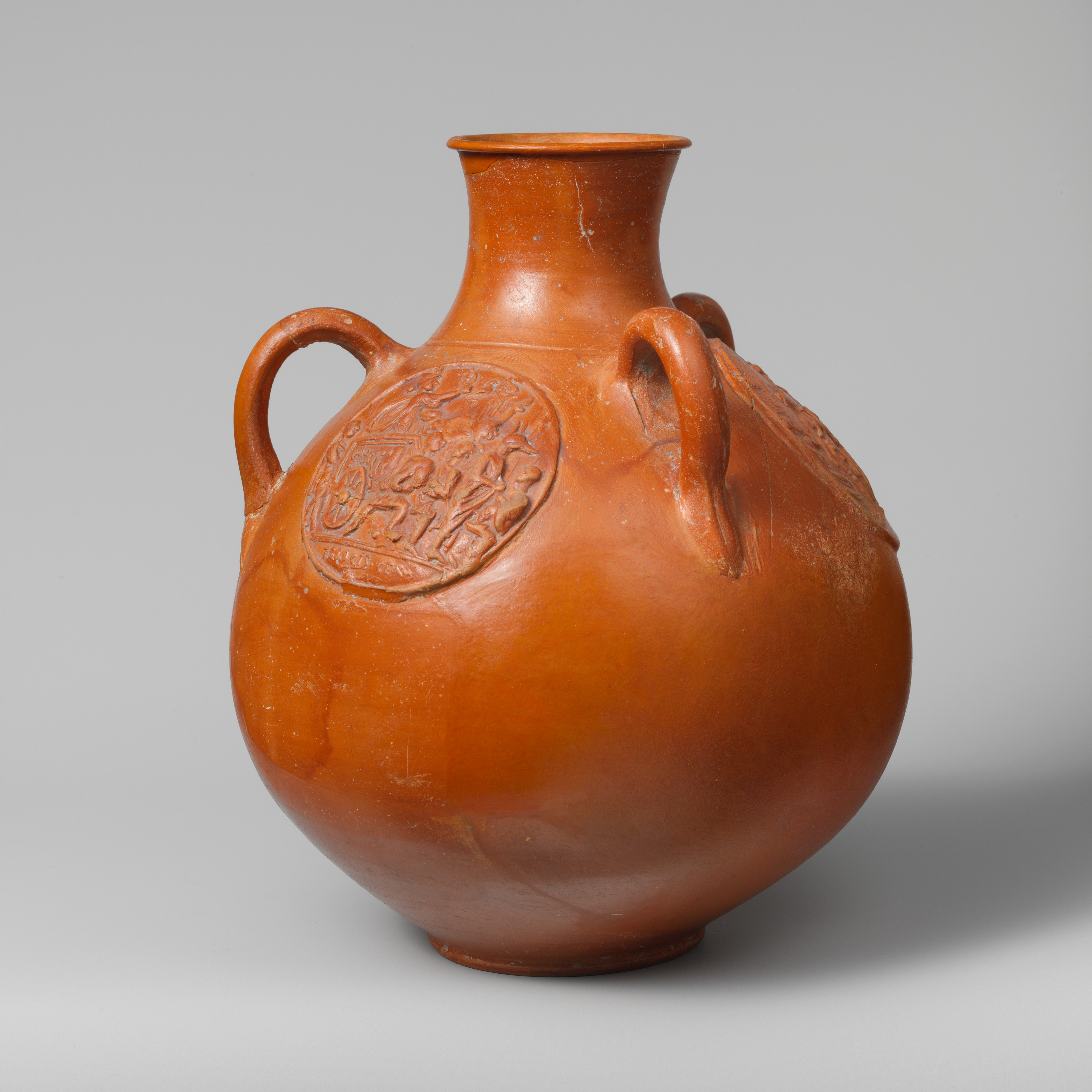
Unknown — "Three-handled jug with relief medallions" (late 2nd–early 3rd century CE), public domain
A city of shining marble?
Hollywood and textbooks love to show Rome as a city of endless marble—temples, arches, mansions, all glimmering white. Julius Caesar struts past blinding columns, senators debate in halls of stone. The myth: the Eternal City was built to last, and last in style.
Brick, paint, and concrete ruled.
Most Roman buildings were made of brick, wood, or concrete—and then covered, when possible, with thin sheets of marble or just painted plaster. The best stone was reserved for monuments, not apartments. Archaeology shows a city buzzing with painted shops, wooden balconies, and graffiti—not just gleaming stone.
Why the white marble myth?
Fire, looting, and centuries of recycling stripped Rome’s original facades. What we see today—bare, pale stone—are the bones, not the skin. Renaissance artists and neoclassical painters painted what survived, not what once was. The marble Rome of our imagination is a ruin, dressed up as a dream.
Most of Rome was brick, wood, and concrete—marble was rare and often only a thin facing. Fires and time stripped away much of what was once there. Step into real Rome, and you’d see a patchwork city, painted and gritty.
