
Did Rome Fall from Lead Poisoning?
You’ve heard it: Rome fell because its pipes and wine cups poisoned everyone with lead. Brain damage, madness—an empire undone by its own plumbing.
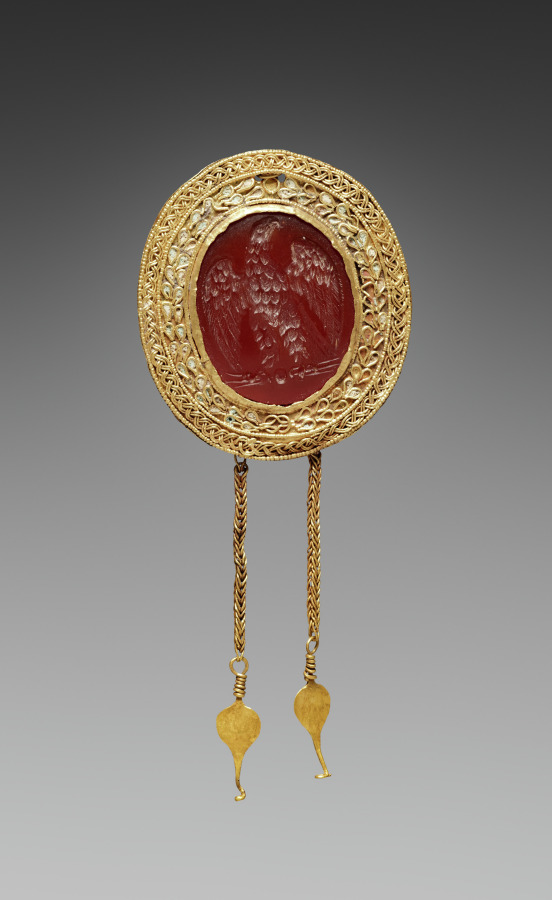
Unknown — "Intaglio: Imperial Eagle" (c. 1–25 CE), CC0
Madness in the water?
They say Rome poisoned itself—wine sweetened with lead, water from lead pipes, emperors losing their minds, city sliding into ruin. Textbooks, documentaries, and novels love this theory. It’s dramatic, it’s scientific, but it doesn’t hold up.
Testing the pipes.
Roman pipes and cups did contain lead, but most water ran through quickly, picking up little residue. Modern tests on Roman bones reveal lead levels…but not much higher than in other pre-modern societies. There’s no spike matching empire-wide madness. Lead exposure was real, but the collapse of Rome was a slow-motion disaster—military defeats, inflation, civil war. Not mass poisoning.
Where did the story start?
Victorian writers wanted a cautionary tale—a mighty civilization undone by its own cleverness. The lead myth fit perfectly, and it stuck. But Rome fell for reasons far messier than bad plumbing.
Lead was everywhere in Rome, but modern testing says the levels weren't enough to bring down an empire. The collapse of Rome was political, military, and economic—lead wasn’t the secret killer.
