
Roman Women Block the Tiber for the Goddess
Roman matrons formed a human barricade across the Tiber—defying soldiers, priests, and the Senate itself.
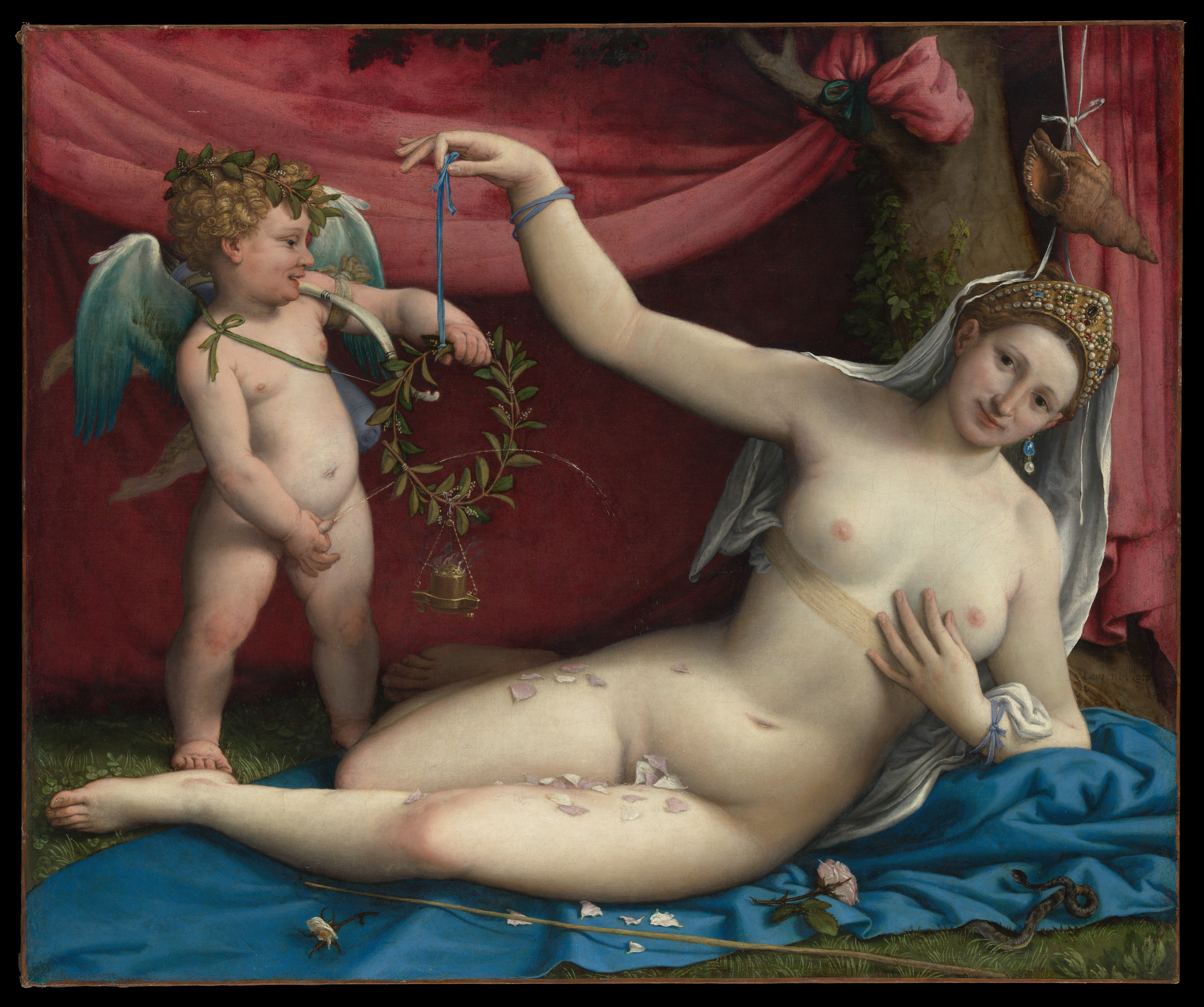
Lorenzo Lotto — "Venus and Cupid" (1520s), public domain
A city in crisis, a river blocked.
With Hannibal at the gates and strange omens in the streets, Rome needed a miracle. Priests decided the city must fetch the black stone of Cybele, the Mother Goddess, from Asia. As the sacred ship approached the city in 204 BC, it ran aground in the muddy Tiber—refusing to move.
The women take charge.
The Senate, priests, and soldiers tried everything to budge the ship. It wouldn’t move. But then a procession of Roman matrons, led by the once-disgraced Claudia Quinta, stepped into the river. They prayed, loosened their veils, and—according to Livy—the ship instantly floated free.
Religious power, seized by women.
Claudia's act transformed her reputation and set a precedent: Rome’s most sacred moment was defined not by the Senate, but by women wading into the water. From then on, the Magna Mater’s festival was theirs to lead. Sometimes the fate of an empire rests on who dares to step forward first.
In a city shaken by war and omens, a group of women forced the state to listen, shifting Roman religion forever.
