
Did All Roman Helmets Have Nose Guards?
You picture every Roman legionary with a helmet featuring a fierce nose guard—stamped on coins, in every movie, intimidating and iconic. But step into a real archaeological site, and you’ll find something different.
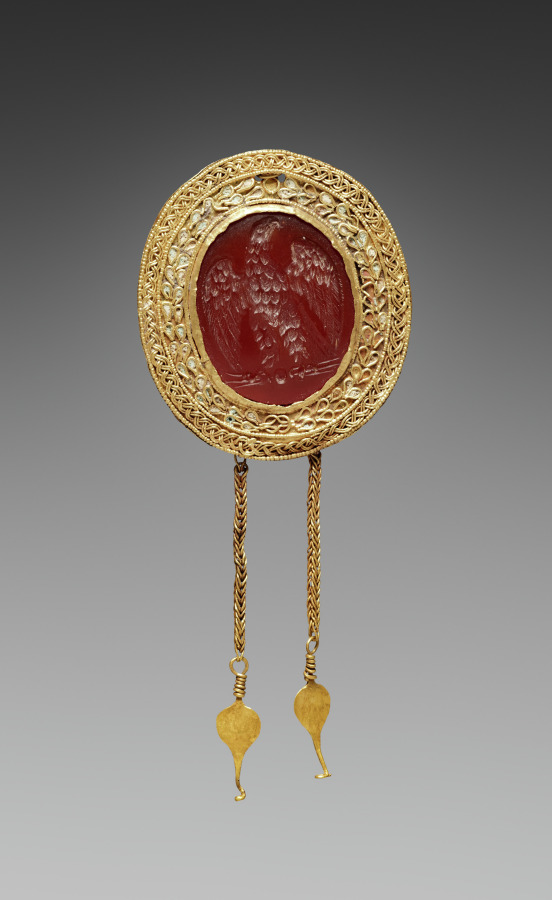
Unknown — "Intaglio: Imperial Eagle" (c. 1–25 CE), CC0
The nose guard myth: Hollywood’s helmet.
Every Roman soldier in pop culture wears a helmet with a metal bar slicing down the middle of his face—nose tucked behind steel. The look is everywhere, from swords-and-sandals epics to Halloween costumes. The idea: it’s the classic Roman helmet.
Check the real helmets—no nose guard.
Actual Roman legionary helmets almost never had a full nose guard. Instead, they featured articulated cheek-pieces and a wide rear neck-plate for protection. The iron nose bar—seen on early Greek and Celtic helmets—was mostly phased out long before the empire. Rome favored visibility over covering the nose.
A myth born from museum mashups.
Early collectors and Victorian illustrators often mixed up Roman helmets with much older Greek and Celtic finds. Movie designers grabbed whatever looked the most dramatic. But on ancient reliefs and in battlefield graves, almost every Roman helmet leaves the nose exposed—built for field commands, not for costume drama.
Most Roman helmets left the nose exposed, favoring cheek-guards and a broad neck plate instead. Hollywood fused Roman helmets with earlier Greek and Celtic designs—the ‘nose guard’ is borrowed armor.
