
Roman Funeral Masks—Wax Faces of the Dead
Walk into a wealthy Roman house and you might see a wall lined with lifelike wax masks—each one a dead ancestor’s face staring back at you.
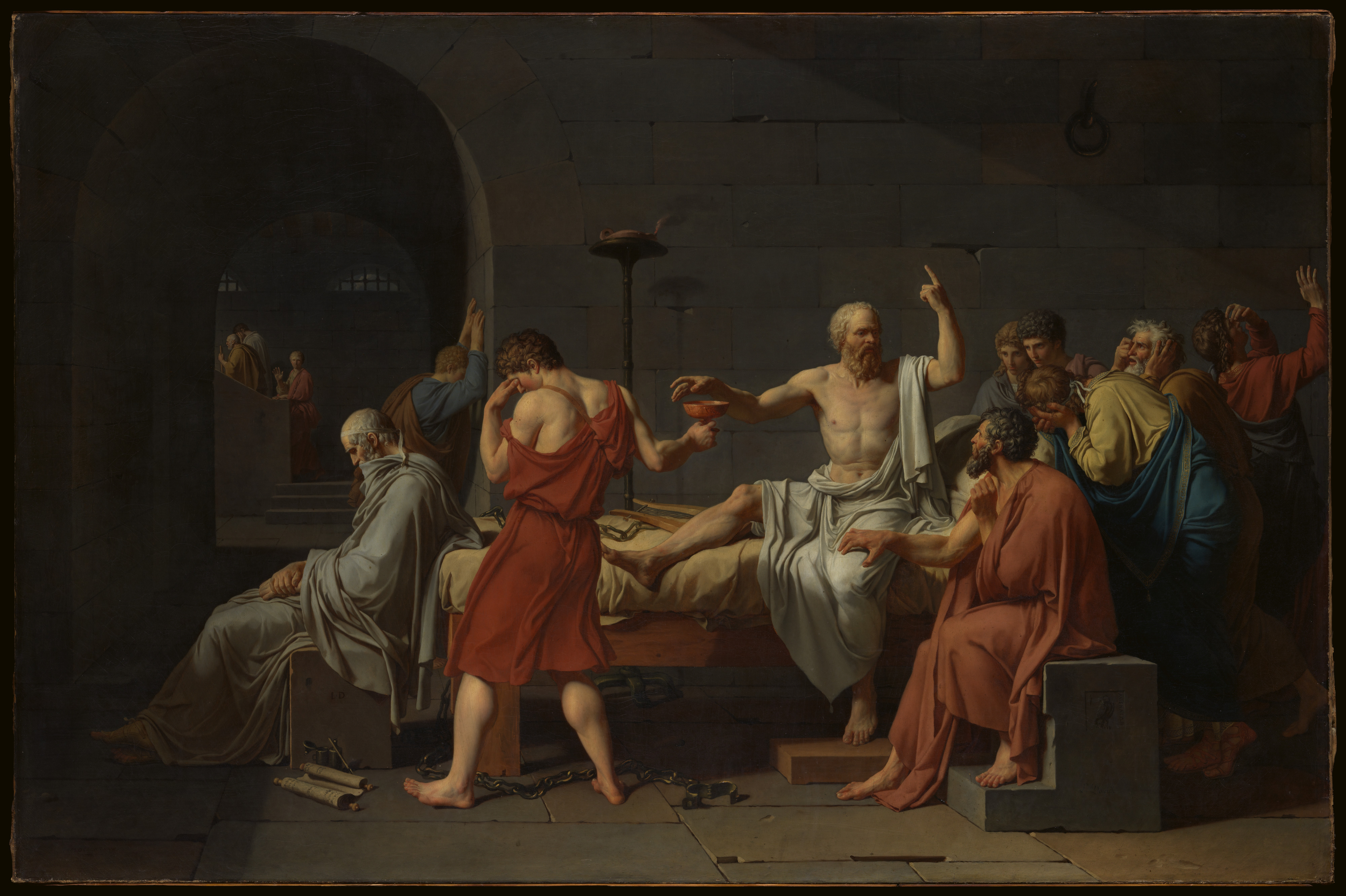
Jacques Louis David — "The Death of Socrates" (1787), public domain
Lifelike Masks Watched Over Roman Houses
Walk into a wealthy Roman house and you might see a wall lined with lifelike wax masks—each one a dead ancestor’s face staring back at you. The air is heavy, the eyes unblinking. To Romans, the dead never really left.
Death Masks Made Minutes After Dying
These weren’t just portraits. Ancient writers and archaeological evidence confirm that families made imagoes—wax masks cast directly from the faces of the deceased. Some were tinted, others carefully detailed, complete with wrinkles and scars. They were kept in wooden cabinets or hung near the front atrium.
Paraded to Prove Power
When an important Roman died, the family brought out the masks for the funeral procession. Each mask was worn by an actor dressed as that ancestor, showing the world just how deep their family’s roots—and their power—ran.
These were imagoes, funerary masks cast from real faces minutes after death. The family kept them at home, parading them on special days in public funerals. It wasn’t just about memory—it was a public display of ancestry, status, and power, right there on the living room wall.
