
Roman Baths: Not a Steamy Free-For-All
Picture a Roman bathhouse—men and women lounging together, naked, in swirling steam. Hollywood’s favorite ancient orgy. But mixed-gender bathing was mostly banned.
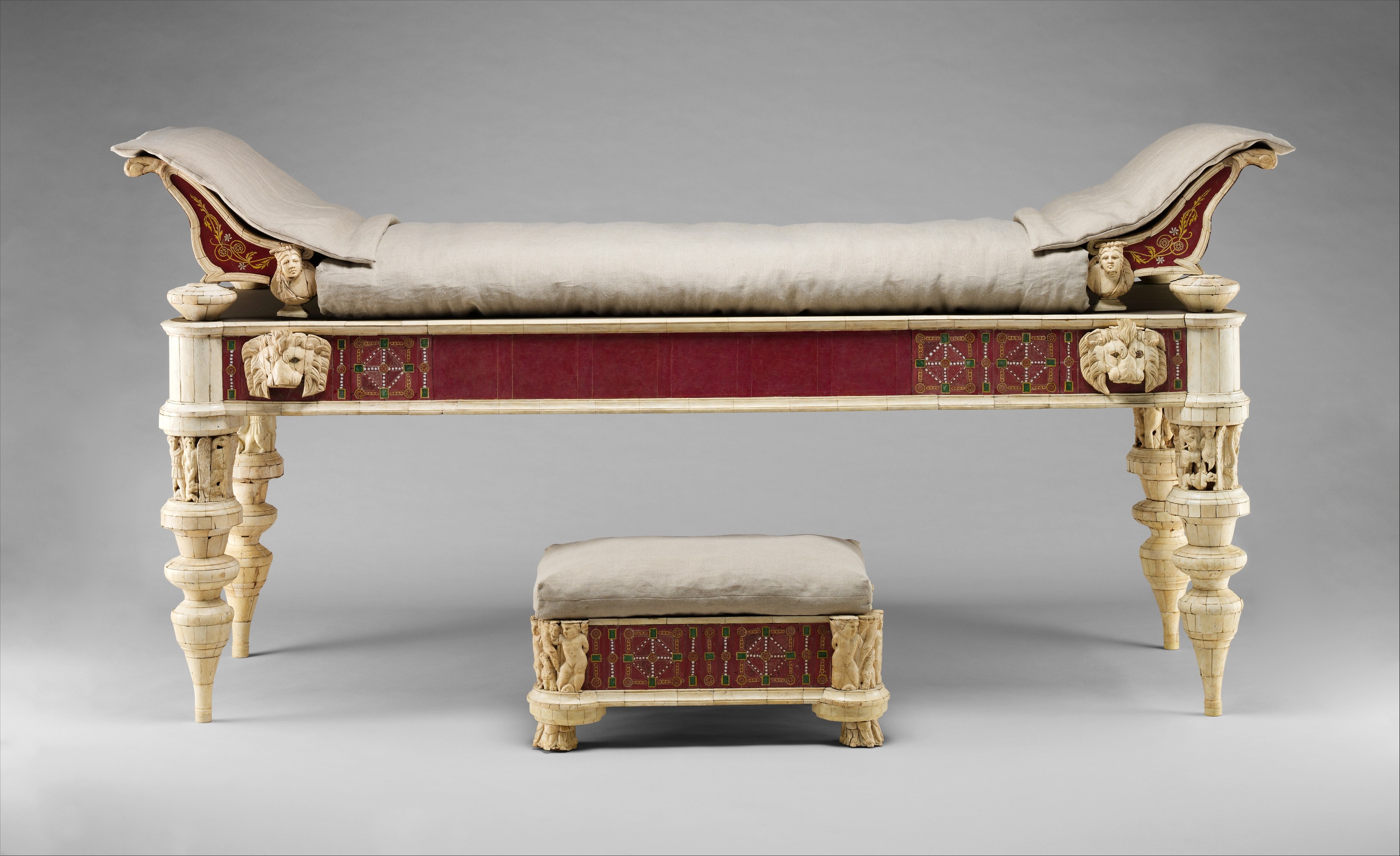
Unknown — "Couch and footstool with bone carvings and glass inlays" (1st–2nd century CE), public domain
The myth of mixed Roman baths.
Every sword-and-sandals epic shows Roman men and women basking side by side in giant public pools—naked, gossiping, scandalously close. The image is everywhere, from Hollywood blockbusters to steamy novels.
The real baths kept sexes apart.
Roman lawmakers and writers from Pliny to Seneca grumbled about the rare moments of mixed bathing—and called for bans. Most big public baths had separate hours or even separate facilities for men and women. When mixed bathing did happen, it was criticized as shocking or immoral.
How did the myth spread?
A few scandalous emperors—Elagabalus especially—flouted the rules, and later writers (and painters) loved to exaggerate. Renaissance and 19th-century artists painted baths as ancient playgrounds, and movies followed their lead. The myth stuck, but Roman reality was usually far more buttoned-up.
Roman law and custom usually kept the sexes separate in public baths. For most of Roman history, bathing together was rare, scandalous, or even illegal.
