
Did Roman Soldiers All Wear Boots?
Every Roman legionary stomps in heavy hobnailed boots—caligae—right? Hollywood’s leather sandals, iron studs, marching the empire flat? Not so fast.
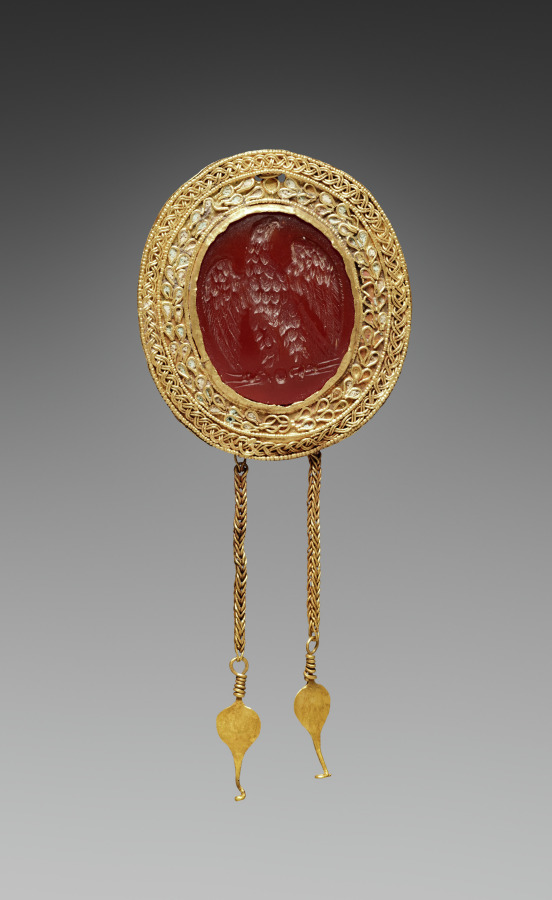
Unknown — "Intaglio: Imperial Eagle" (c. 1–25 CE), CC0
Boots on every legionary?
It’s the classic image: Roman soldiers tramping across Europe in uniform, thick-soled boots. Every textbook, every museum figurine, every movie—those hobnailed caligae were standard Roman issue. Except they weren’t.
Bare feet, sandals, winter socks.
In the snowy north, soldiers wore closed boots or even wrapped their feet in rags for warmth. Hot campaigns in the east saw many ditching boots for sandals—or going barefoot. We’ve found leather shoes, felted slippers, and improvised gear from Hadrian’s Wall to Dura-Europos. Roman armies adjusted to the land underfoot, not just rules from Rome.
How did the boot myth stick?
Caligae left deep marks—literally. Their iron studs turned up by the thousands in excavations, so early archaeologists imagined them on every foot. But literary sources and shoe finds tell a messier, more adaptable story.
Roman soldiers switched up their footwear—boots, sandals, or even barefoot—depending on climate, campaign, and rank. Archaeology reveals a world of improvisation under the armor.
