
Musonius Rufus on Exile as Opportunity
“To the wise man, every place is a homeland.” — Musonius Rufus, in Greek: «Πανταχοῦ γάρ ἐστιν ἄνθρωπος σοφός ἑαυτῷ πατρίς.» Rome’s toughest Stoic made being kicked out of town the start of his education.
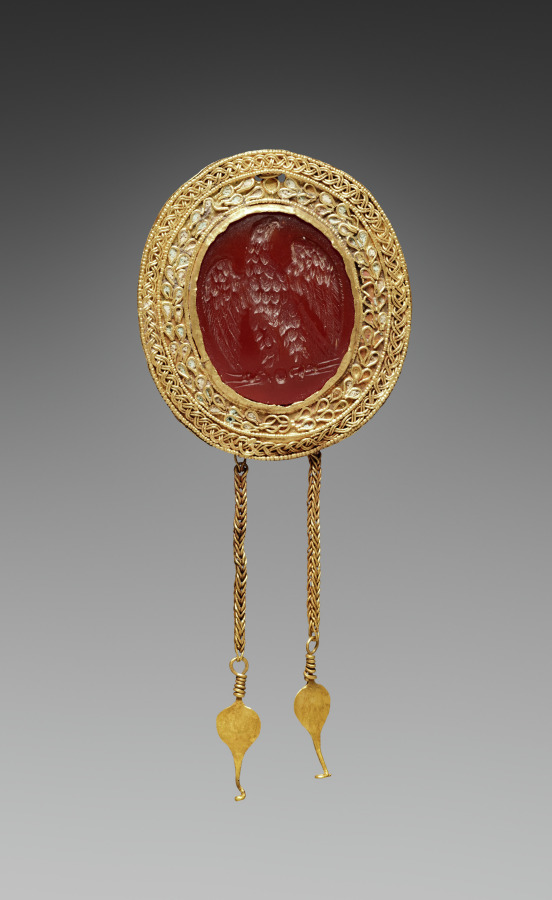
Unknown — "Intaglio: Imperial Eagle" (c. 1–25 CE), CC0
Making ‘nowhere’ into ‘home’.
Musonius Rufus, in Stobaeus' Anthology (Sermon 9), writes: «Πανταχοῦ γάρ ἐστιν ἄνθρωπος σοφός ἑαυτῷ πατρίς.» — “To the wise man, every place is a homeland.” Not a slogan—this was survival gear for a man banished over and over.
A Stoic map: redraw the borders.
Most Romans saw exile as a death sentence. For Musonius, it was an assignment—live as fully in Scythia or Gyaros as in Rome. If virtue travels with you, comfort and citizenship can’t be stolen. You set the terms.
A philosopher with a suitcase.
Musonius Rufus was exiled by Nero, then Vespasian, then Titus. He taught farming to senators on windblown islands, always declaring that a wise man grows roots wherever he lands. Today, his lines read like a cure for homesickness—and excuse-busting in disguise.
Musonius suffered exile three times under three different emperors. Each time, he turned being shipped off into a new test—and a chance to expand what counted as ‘home.’
