
Musonius Rufus on Why Philosophy Demands Action
"Philosophy is not a matter of words, but of deeds." — Musonius Rufus, exiled again and again, tells Rome to stop clapping and start living it.
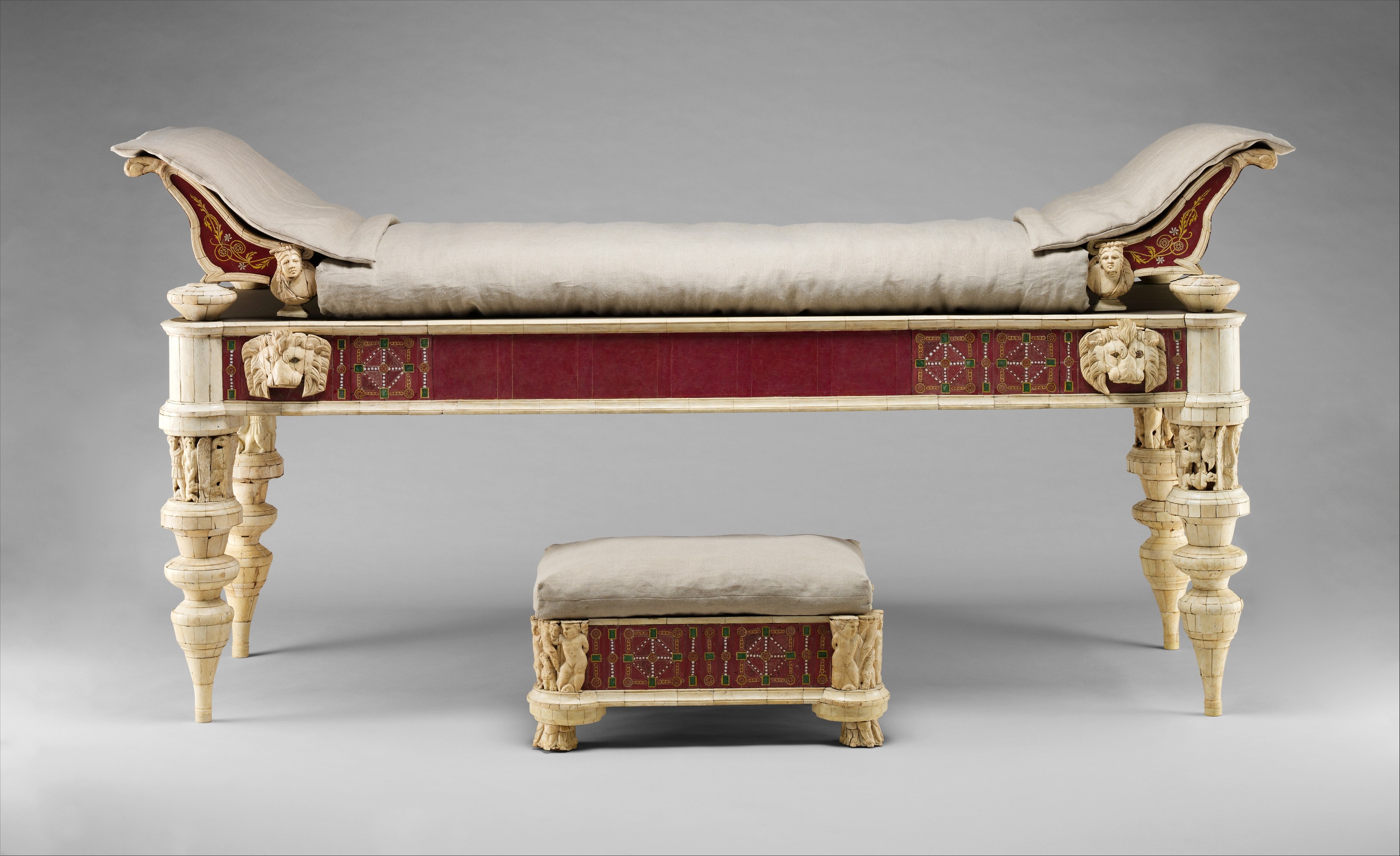
Unknown — "Couch and footstool with bone carvings and glass inlays" (1st–2nd century CE), public domain
Stop talking, start living.
Musonius Rufus, in his Discourses (Lecture V), makes it plain: «Οὐ λόγων ἀλλὰ ἔργων φιλοσοφία.» — "Philosophy is not a matter of words, but of deeds." He didn’t just say it to students—he was exiled for living it.
Virtue is sweaty work.
For Musonius, moral talk without action was fraud. He told senators, soldiers, and slaves to practice virtue the way a blacksmith hammers iron—by repetition, under heat. No shortcuts. No spectators.
Philosophy’s iron drillmaster.
Musonius Rufus was called 'the Roman Socrates'. He survived banishment, hunger, and humiliation by treating life as daily training. His challenge still stings: virtue must be worn into the body, not just the tongue.
Musonius wasn’t interested in applause. Virtue, for him, needed callused hands.
