
Hypatia, Philosopher in a World on Fire
A mob drags Hypatia through the Alexandrian streets, her hands still stained with chalk.
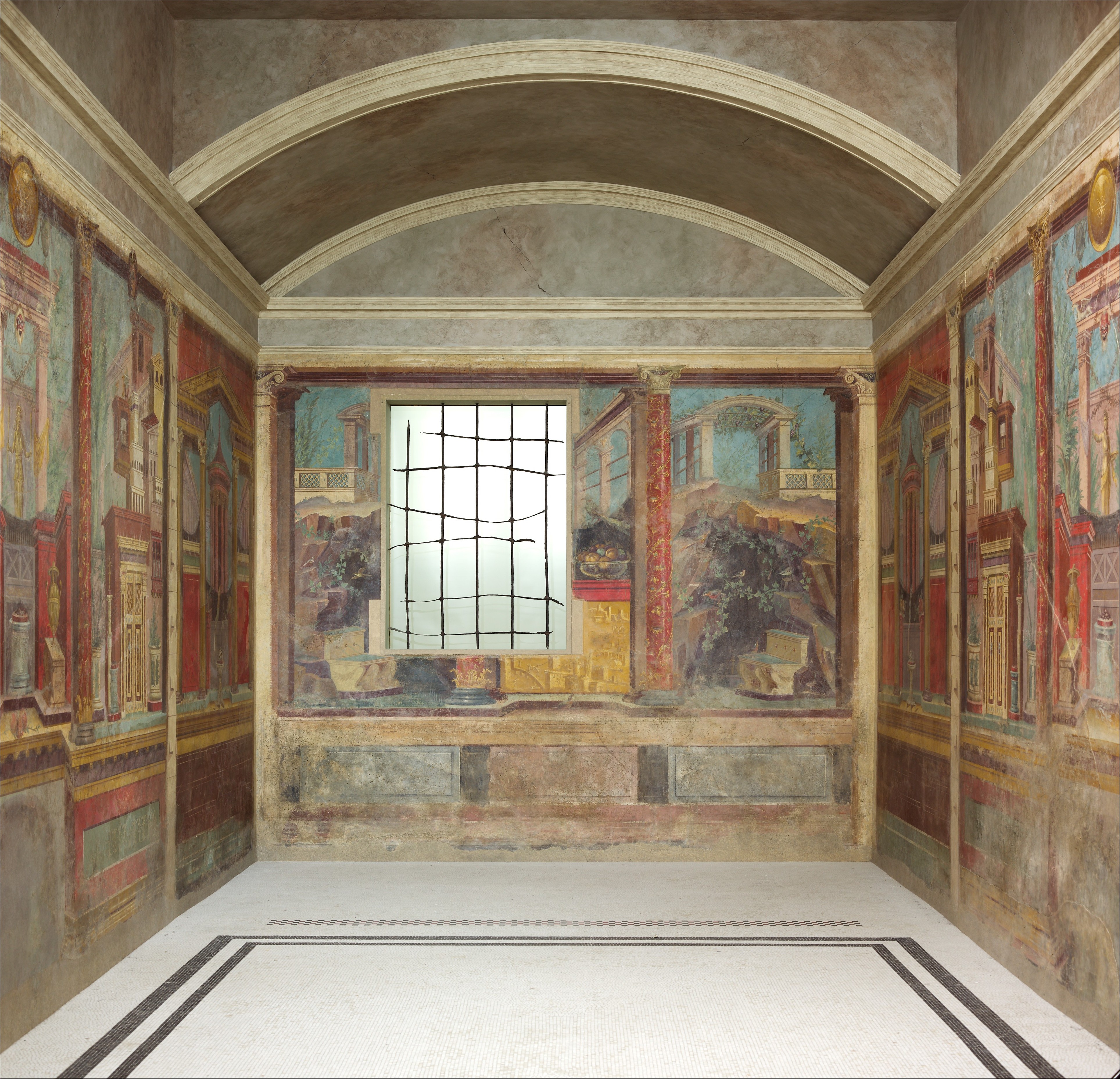
Unknown — "Cubiculum (bedroom) from the Villa of P. Fannius Synistor at Boscoreale" (ca. 50–40 BCE), public domain
Chalk Dust and Fury in Alexandria
A crowd swarms Hypatia, the city’s most famous philosopher. Her hands are still white with chalk from the lecture room—evidence of questions the city can no longer tolerate.
Ideas in the Crossfire
In early 400s Alexandria, violence erupts between Christians, pagans, and old elites. Hypatia refuses to pick a side, choosing truth over tribalism. To some, her mind is dangerous as any weapon.
When Argument Falls Silent
Her murder echoes long after the mob dissolves. Philosophy is silenced—a city’s mind closing its eyes. From that day, Alexandria’s golden age of debate grows dimmer, brick by brick.
In a city split by faith and fear, Hypatia clings to reason like a lifeline. She’s neither priest nor politician—just a mathematician with chalk dust on her robes and dangerous questions in her lectures. Her death is not just a murder; it’s the sound of a world closing its doors to debate, trusting violence over thought.
