
Did Greek Actors Wear Oversized Masks?
Every Greek tragedy wore a carved, oversized mask — fixed expression, huge mouth, almost cartoonish.
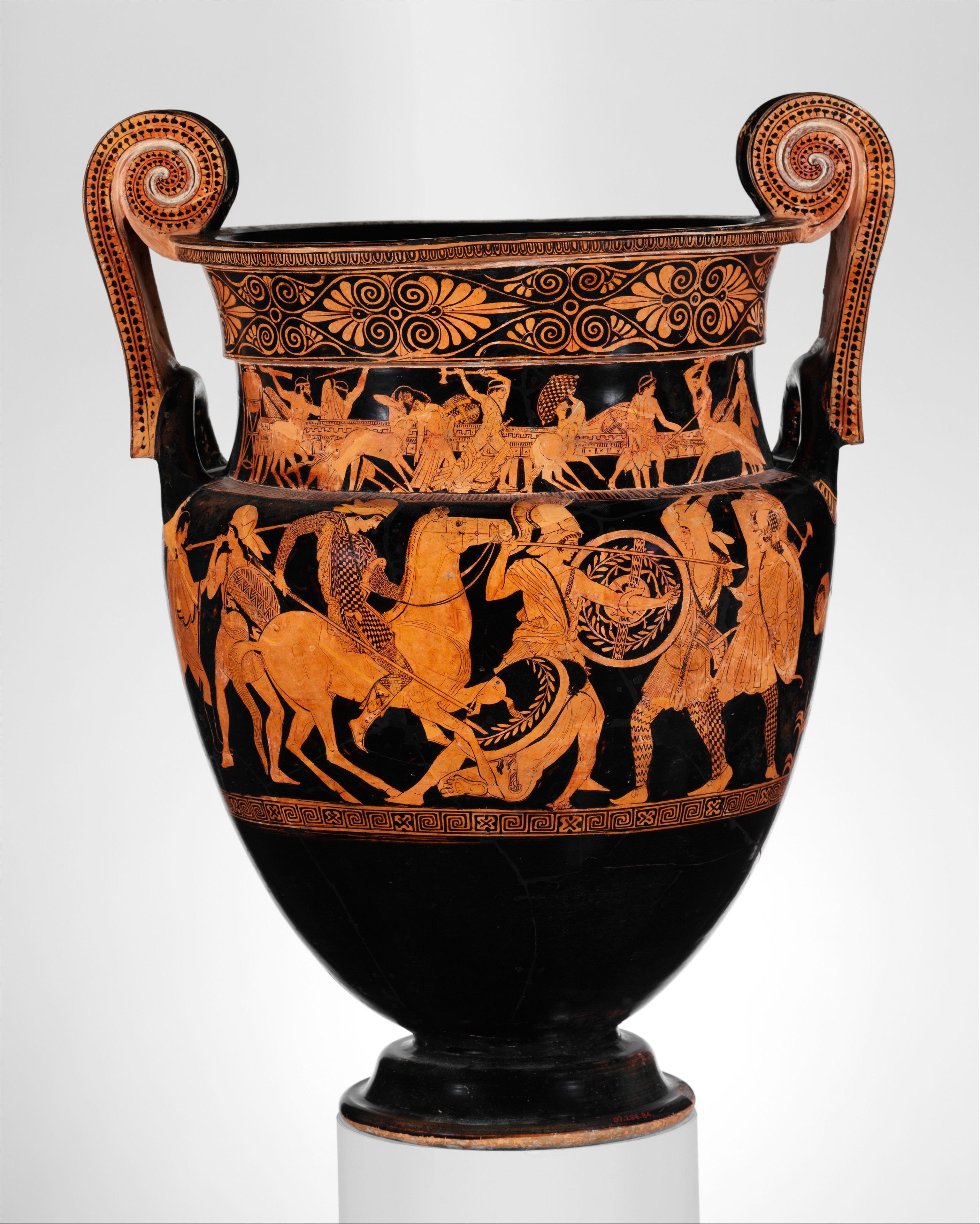
Painter of the Woolly Satyrs — "Terracotta volute-krater (bowl for mixing wine and water)" (ca. 450 BCE), public domain
The mask that swallowed the actor.
We picture every Greek actor hidden behind an enormous mask — all blank stares and gaping mouths, the original emoji. School textbooks and movies still lean into this, making the faces look almost monstrous.
They were crafted for clarity, not comedy.
Real Greek theatre masks, found in archaeological digs and painted on vases, were sized to fit the face and designed to amplify emotion, not obscure it. Echthems (actual clay masks found at sites like Corinth) show features tailored for performance — clear expressions and enough openness for the actor’s voice to project. Not the parade-float heads you see in pop culture.
A myth built for spectacle.
The oversize myth grew as theater historians tried to explain how vast Athenian audiences could see emotion from far away. But ancient writers like Pollux and vase painters give us real clues: stylized but human, not caricature.
Greek theatre masks were expressive, but not absurdly large or cartoonish. Archaeological finds show they were crafted for performance and resonance, not comic exaggeration.
