
Did Greeks Burn Offerings Inside Temples?
If you imagine Greek temples thick with incense and animal sacrifice, you’re not alone. Many think all the ritual action happened inside, smoke swirling around giant statues of the gods.
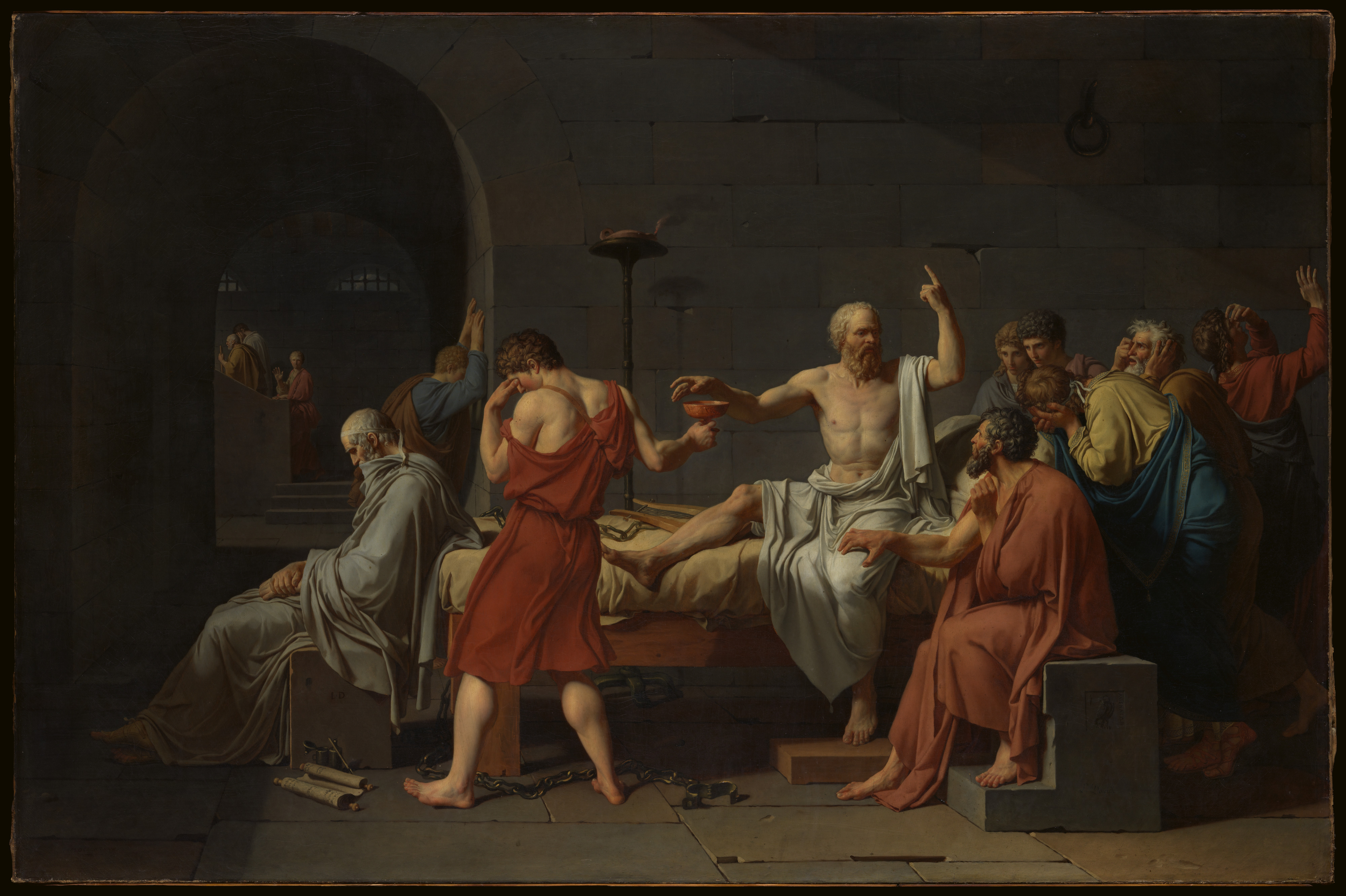
David — "The Death of Socrates" (1787), public domain
The myth of smoky, sacred interiors.
It’s easy to picture: priests dragging animals into the Parthenon, flames licking up to Athena’s feet, worshippers coughing through clouds of incense. Pop culture and even some museum reconstructions love this image. But it doesn’t hold up.
Altars under open sky.
Ancient Greeks performed most sacrifices outside, at stone altars right in front of the temple’s entrance. Inside, it was quiet—home to the god’s image and offerings like oil or garlands, not meat or fire. Archaeological finds show thick layers of ash outside sanctuaries, not within.
A myth born from misunderstanding.
Victorian painters and early tourists often assumed temples worked like churches—holy space packed with rituals. But Greek religion was public and open-air. The confusion lingers because we keep comparing Athena’s house to a cathedral.
Most sacrifices happened outdoors, at altars in front of temples. The inner sanctum was reserved for images of the gods—not blood and fire.
