
Greek Surgeons Carried Pocket Toolkits
A fifth-century Greek doctor opened wounds and stitched arteries using a folding bronze toolkit—small enough to fit in his tunic.
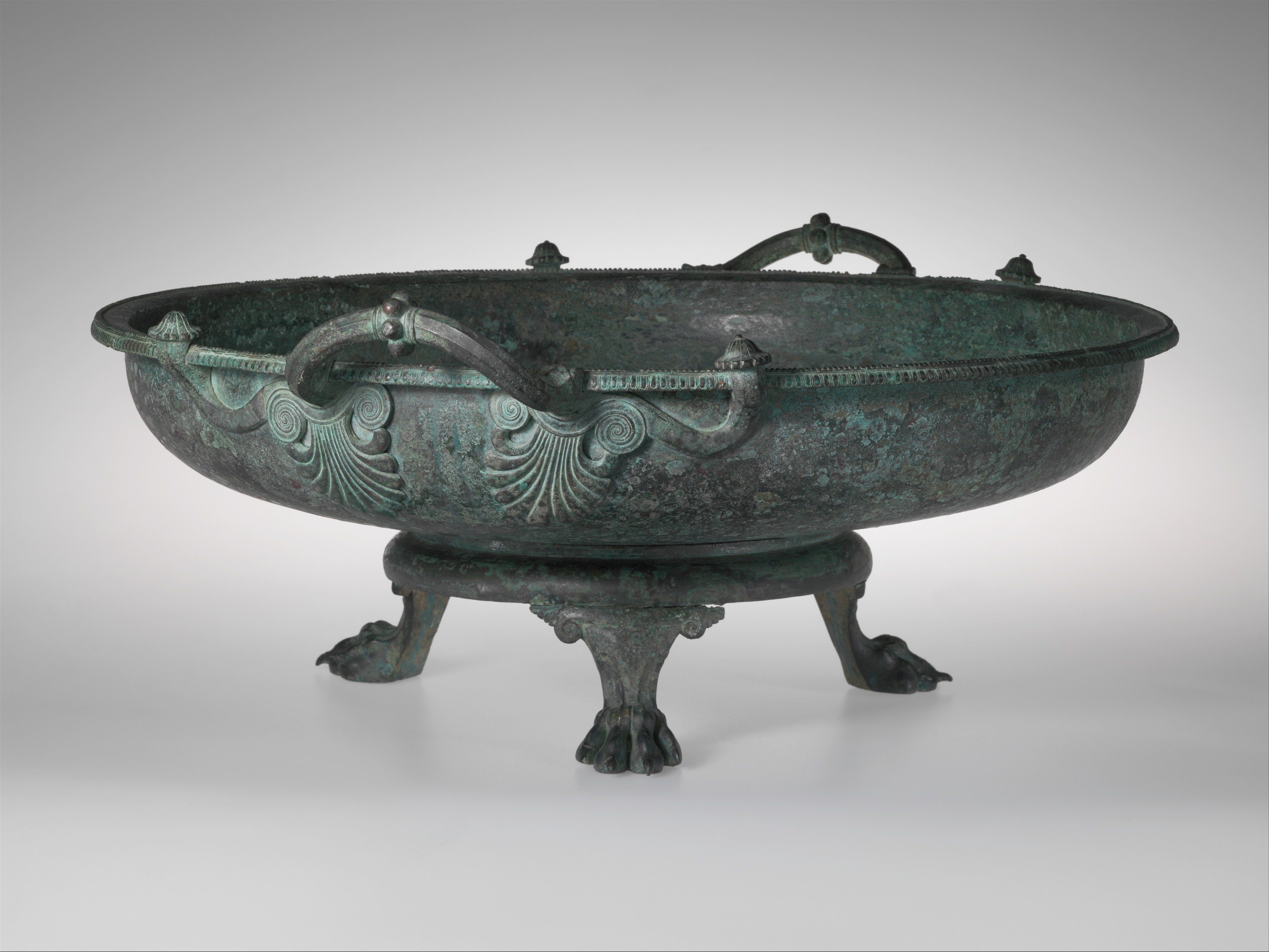
Unknown — "Bronze footbath with its stand" (late 5th–early 4th century BCE), public domain
Surgery on the Go
A Greek physician didn’t just carry bandages—he packed bronze scalpels, needles, and brain-draining tubes in a tidy leather kit, ready to perform surgery anywhere.
Sharper Than You Think
Sites like Olynthos reveal kits with more than a dozen specialized tools. Hippocratic treatises describe everything from bladder stones to trepanation—proof that medical technology could travel in a pocket.
Archaeologists have unearthed surgical kits from classical sites like Olynthos and Athens, packed with scalpels, probes, forceps, and even tiny needles. Hippocratic medicine was hands-on: a Greek surgeon traveled with a pouch of precisely crafted tools, ready for anything from setting a bone to draining fluid from the brain. Even in a world without anesthesia, the technology was sharper than you’d guess.
