
Did the Greeks Invent Science from Scratch?
We picture Socrates, Plato, and Aristotle as lone geniuses who invented science from thin air. But Greek thinkers built on centuries of ideas from Egypt, Babylon, and beyond.
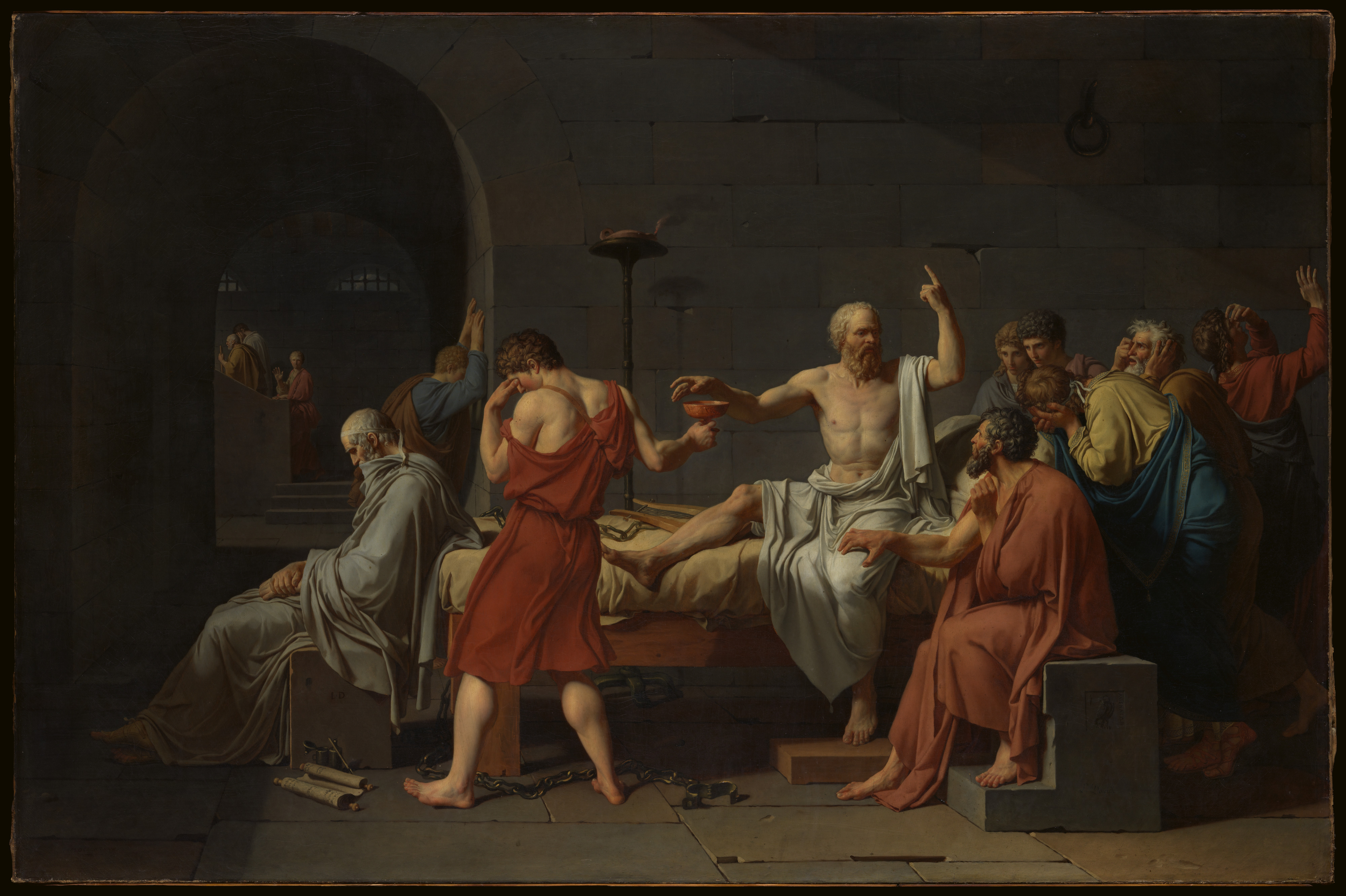
Jacques Louis David — "The Death of Socrates" (1787), public domain
Did Greek geniuses invent science alone?
Most of us were taught that Greek philosophers—Socrates, Plato, Aristotle—created science from nothing. Western textbooks praise their 'firsts' in math, logic, and medicine, as if civilization began at the Parthenon's door.
They borrowed—and were proud of it.
Greek thinkers traveled and studied in Egypt and the Near East. Herodotus calls Egypt the 'cradle of geometry.' Babylonian astronomers tracked the stars for centuries before Greeks named a single constellation. Hippocrates drew from Egyptian medical texts. The Greeks were great synthesizers, not isolated originators.
How did the myth take root?
Renaissance scholars rediscovered Greek texts and saw them as the foundation of all learning—sometimes ignoring the footnotes about 'barbarian wisdom.' For centuries, 'Western Civilization' textbooks skipped past the rich networks of knowledge in ancient Egypt, Babylon, and Persia.
Greek philosophers absorbed and adapted knowledge from older civilizations—astronomy, math, even medicine. The real story is a web of ancient cultural exchange, not a solo act.
