
No, the Olympics Weren't a Perfect Peace
Everyone pictures the ancient Olympics as a magical truce—soldiers drop their swords, wars stop, and the whole Greek world gathers for sport.
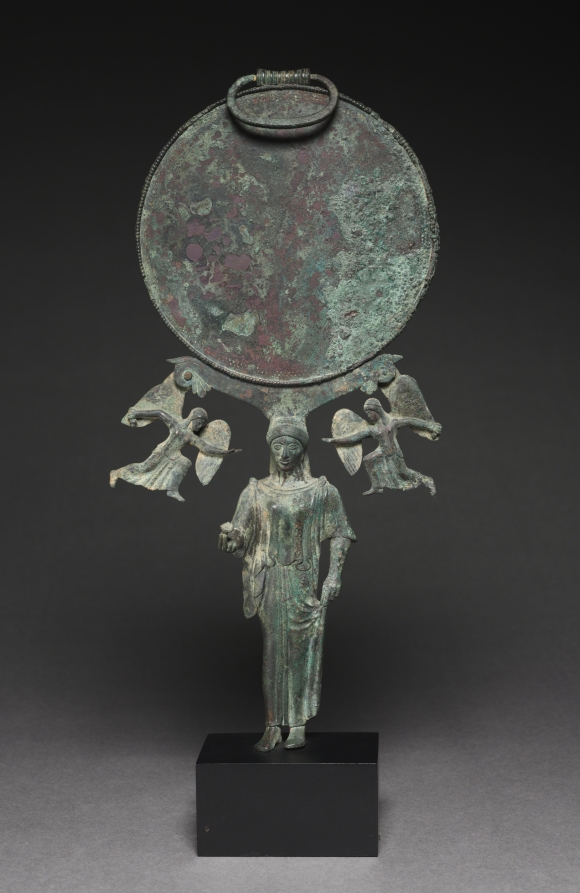
Unknown — "Mirror" (c. 470–460 BCE), CC0
Olympic truce: universal peace?
Textbooks say the Olympics united all Greeks in peaceful sport. Armies supposedly laid down their weapons so athletes could travel safely. Sounds almost utopian.
The truce was just a travel pass.
The 'ekecheiria' allowed athletes and spectators to cross enemy lines to Olympia, but battles raged on elsewhere. In 420 BCE, Sparta was fined for attacking during the truce. Sometimes, the Games themselves erupted into brawls—nobody was above a grudge.
Why the myth of Olympic peace?
Later writers romanticized the ideal of Greek unity through sport, turning a patchy, practical arrangement into a symbol of world peace. The Olympic truce lasted on paper—blood stains didn’t wash out so easily.
The Olympic truce only covered travel to Olympia, and wars often continued. Athletes and spectators sometimes fought, and cities were even fined for breaking the peace.
