
Greek Statues: Not All Naked, Not All White
You picture every Greek statue as glowing white marble, perfectly nude. The museum look. But Greek statues once blazed with color—and many wore bronze accessories and even clothes.
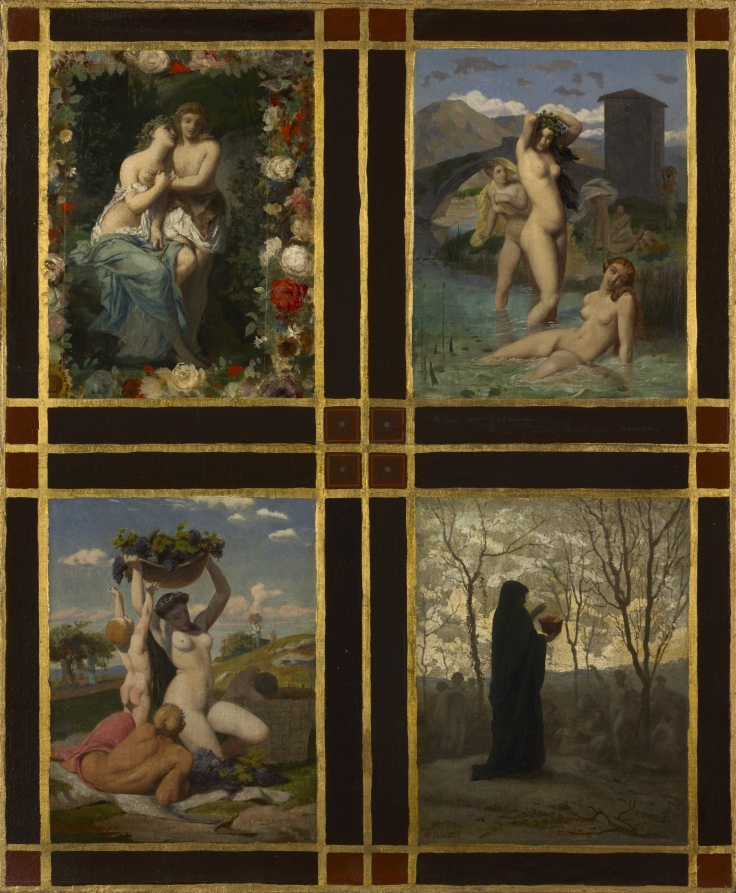
Henry Picou (French, 1824–1895) — "The Four Seasons" (1850), CC0
Every Greek statue was bare, white marble?
You picture a row of ancient statues—nude, impossibly smooth, dazzlingly white. Every museum keeps them that way. The blank marble body: it’s the image that stuck in every textbook.
They once exploded with color.
Traces of paint, called 'polychromy,' have been found on original Greek statues—reds, blues, gold, even intricate patterns. Ancient authors described gleaming armor and bright eyes on their gods. Statues like Athena Parthenos wore shields, helmets, and painted robes. Nude and white? That’s thousands of years of fading, plus later collectors cleaning off the “dirt.”
Why do we get the colorless version?
When ancient statues surfaced in Europe, collectors prized the pure marble and scrubbed off the remains of paint. By the time museums made it a rule, the myth of the blank white marble had become Western art’s standard—color was seen as “vulgar.”
Archaeologists have found microscopic traces of bright paint on ancient statuary, and literary sources mention colored surfaces. Some statues wore real bronze helmets, shields, or even gilded tunics. The blank marble look? That’s centuries of weather—and modern taste—talking.
