
Greek Hoplites: Not a Uniform Army
Think every Greek hoplite marched in lockstep, identical helmet and bronze? Hollywood loves their matching armor. The truth is messier—and more colorful.
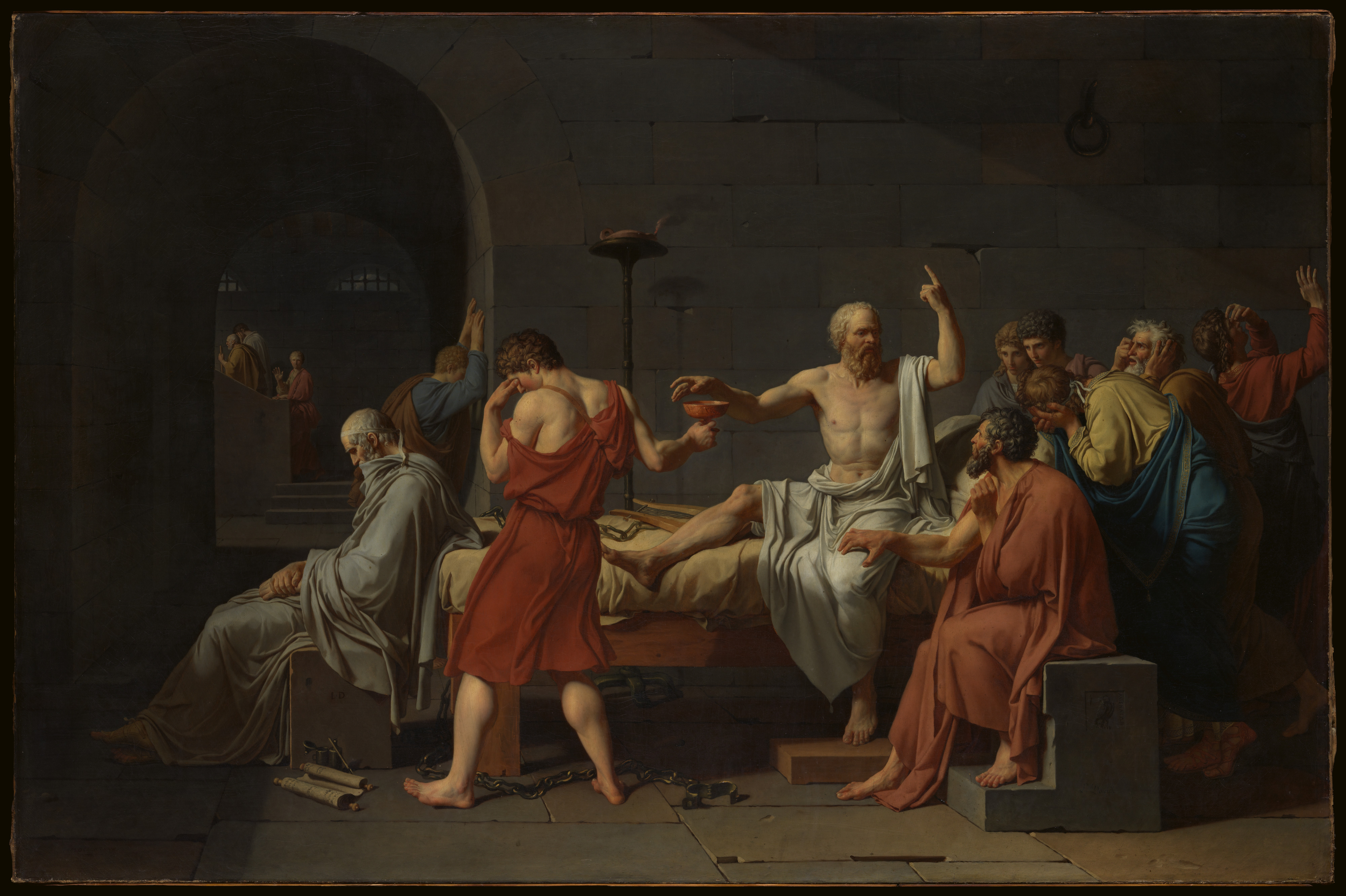
Jacques Louis David — "The Death of Socrates" (1787), public domain
The myth of the matching phalanx.
Picture a Greek battlefield: a phalanx of hoplites, each man in the same bronze helmet, same red cloak, same shining shield. Movies and textbooks love this image—an army of marching clones. But real Greek soldiers looked nothing alike.
Battle gear was a patchwork.
Most hoplites brought whatever armor they could beg, borrow, or inherit. Some wielded battered helmets with missing cheek guards. Shields were family heirlooms, often painted with wild designs—lions, snakes, gorgons, or even a grinning face to spook enemies. Wealthier warriors might splurge on a flashy cuirass, but many fought in simple linen and bronze hand-me-downs.
Where does the myth come from?
Nineteenth-century painters and early archaeologists loved the idea of the disciplined, identical Greek warrior—an ideal for modern armies. But dig up a real battlefield, and you'll find a jumble of mismatched kit. Ancient vase paintings show it, too: no two hoplites ever quite matched.
Greek hoplites cobbled their gear together from family pieces, battlefield loot, and whatever they could afford. Archaeology has uncovered shields painted with owls, snakes, and eyes, and helmets ranging from gleaming Corinthian to worn-out, dented caps. Greek battlefields were a riot of styles, not an army of clones.
