
On This Day: Fordicidia, Sacrificing for Rome’s Fields
April 13: Rome’s priests sacrificed a pregnant cow—hoping her unborn calf would coax better harvests from the soil.
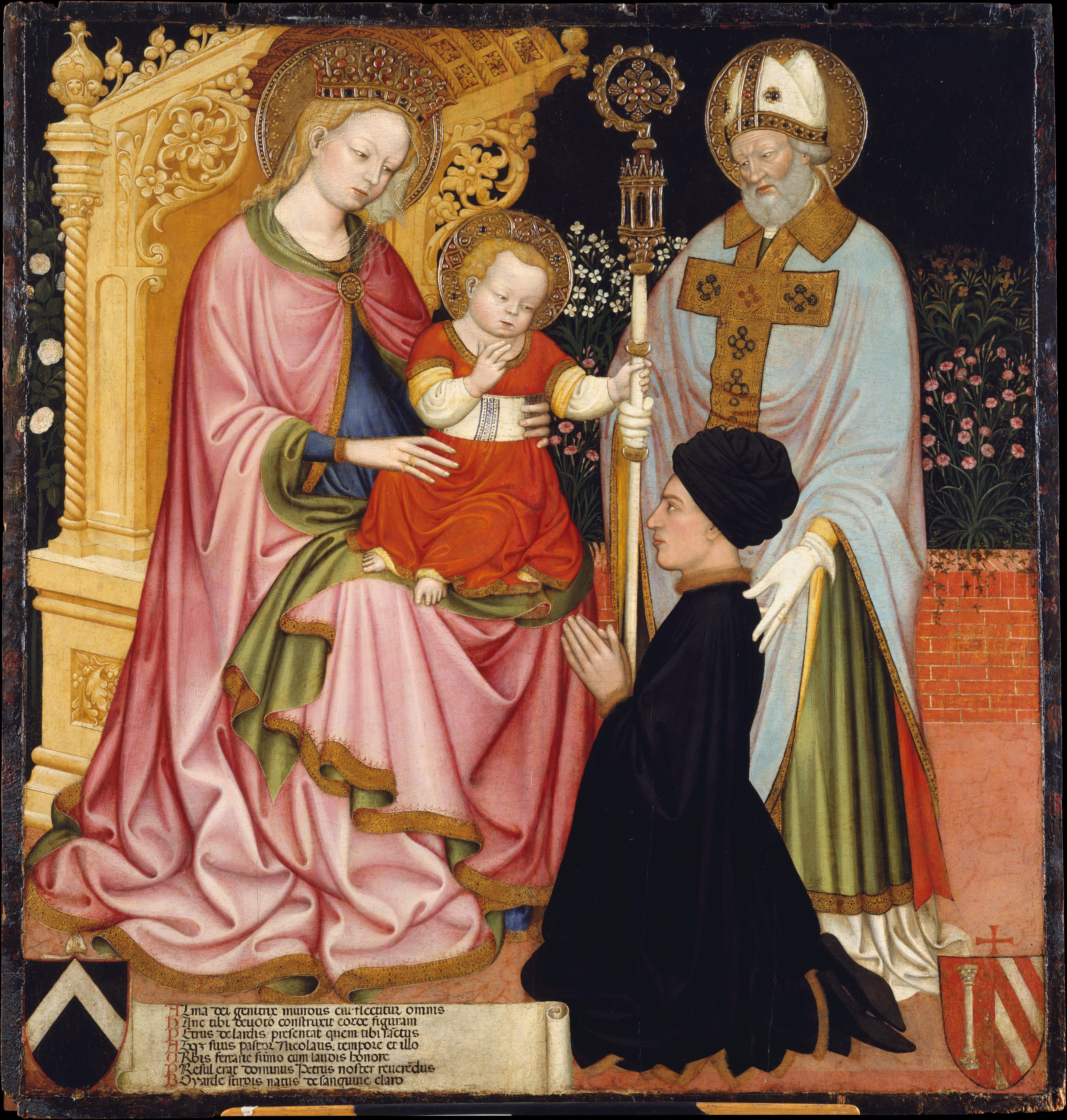
Master G.Z. (possibly Michele dai Carri, Italian, Ferrara, active by 1405–died 1441 Ferrara) — "Madonna and Child with the Donor, Pietro de' Lardi, Presented by Saint Nicholas" (ca. 1420–30), public domain
A hidden calf, a public prayer.
On April 13, Roman priests led cows—always pregnant—up rough temple steps. Each of Rome’s thirty curiae sent one. The sacrifice took place in the heart of the city, the blood and heat rising toward the Capitoline sky.
Fertility by fire.
The key? The unborn calf was removed and burned on a sacred altar, its ashes saved for future rituals. Romans believed this double sacrifice—mother and unborn child—would drive away crop blight and feed the city’s swelling hunger.
A festival with deep roots.
The Fordicidia was ancient even by Roman standards—Ovid traced it to the legendary king Numa. Its renamed ashes would soon play a role in the Parilia, binding Rome’s calendar in a cycle of birth, death, and renewal.
The Fordicidia was a blood-soaked, practical prayer for fertility: one cow per curia, unborn calves burned, asking Earth itself for bounty.
