
Epicurus on Desire and Sufficiency
"If you wish to be rich, do not add to your money, but subtract from your desires." Epicurus, in Greek: «Εἰ βούλει πλούσιος εἶναι, μὴ πλούτου πρόσθες, ἀλλὰ τῶν ἐπιθυμιῶν ἀφαίρει.» — "If you want to be rich, don’t add to your wealth, but subtract from your desires."
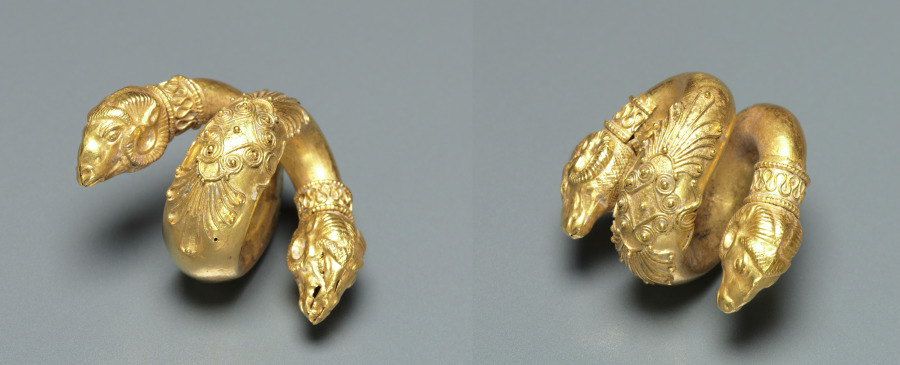
Unknown — "Pair of Earrings or Hair Ringlets with Ram Head" (400s BCE), CC0
The richest man in Athens had almost nothing.
Epicurus, in a fragment preserved by Plutarch (Moralia, 'On Tranquility of Mind'), says: «Εἰ βούλει πλούσιος εἶναι, μὴ πλούτου πρόσθες, ἀλλὰ τῶν ἐπιθυμιῶν ἀφαίρει.» — "If you want to be rich, don’t add to your wealth, but subtract from your desires." This is not a get-rich-quick plan — it’s a recipe for contentment.
What’s the catch?
Epicurus founded his own school, the Garden, and lived on bread, cheese, and friendship. He measured wealth by freedom from craving. For him, the only poverty was endless wanting. Enough was always waiting — if you could just decide when to stop.
More monk than party animal.
Epicurus gets miscast as a hedonist, but he turned pleasure into philosophy. He believed happiness was quiet, not wild — best shared with friends and olives, not gold. Today he’d say the only real luxury is needing less.
Epicurus flipped the script on ambition. Happiness wasn’t about having more — it was about needing less. Hedonist? Maybe, but with the self-control of a monk.
