
Epicurus on the Gods
"The gods exist, but they are not concerned with us." — Epicurus, in a world haunted by signs and omens, draws a line between heaven and earth.
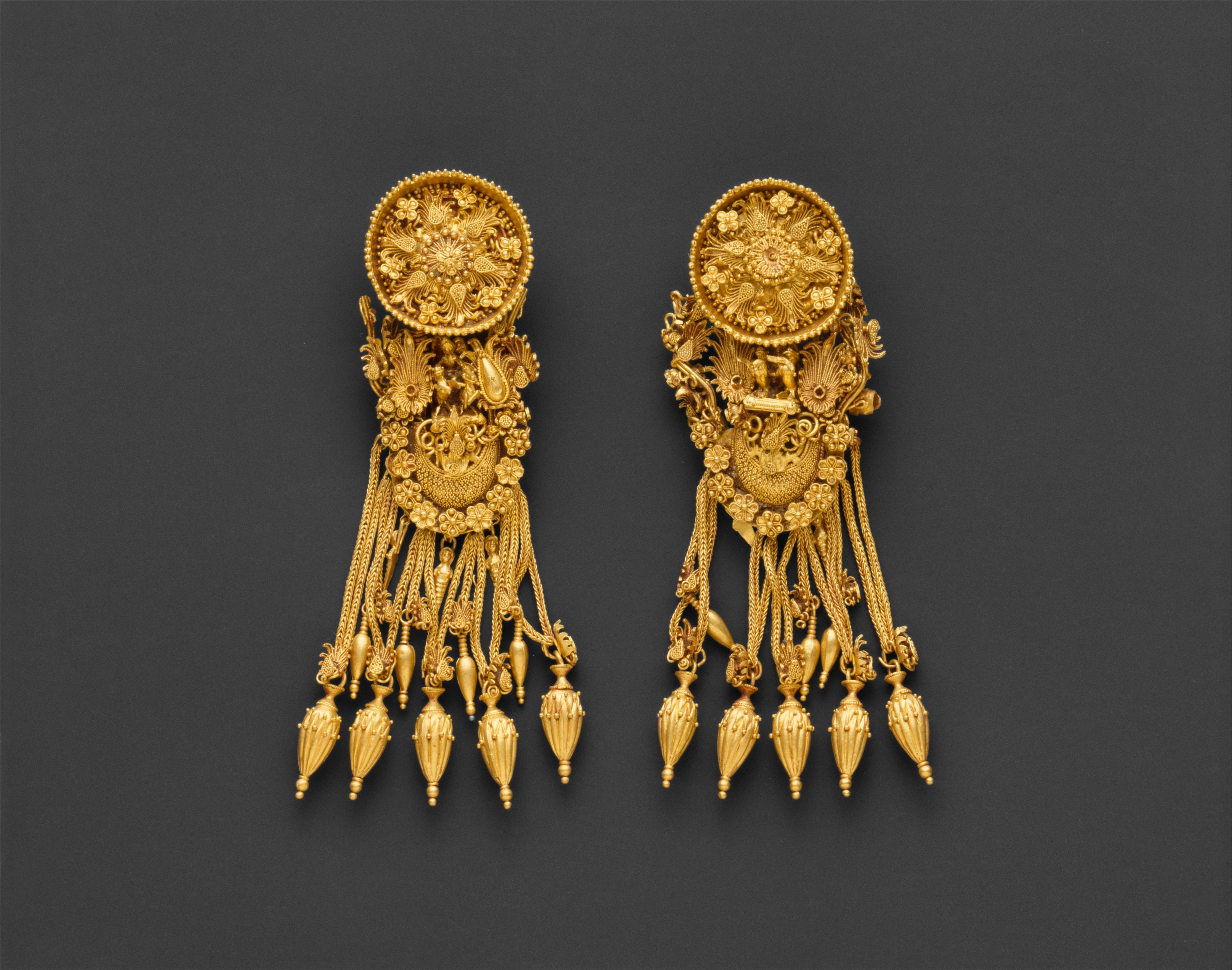
Unknown — "Gold earrings with disk and boat-shaped pendant" (ca. 300 BCE), public domain
Epicurus: The gods are absent landlords
In Letter to Menoeceus, Epicurus writes: «Οἱ θεοὶ μὲν γάρ εἰσιν, οὐ μέντοι καθ' ἡμᾶς ἐπιμελοῦνται.» — «The gods exist, but they are not concerned with us.» He wasn’t just stirring the pot — he was freeing people from crippling superstition.
A new kind of piety
Epicurus taught that fear of divine punishment was poison. The gods, he argued, live in perfect bliss and have no reason to meddle in human affairs. That meant people could stop trembling at every thunderclap — and start building their own happiness.
The garden philosopher
Epicurus ran his school from a walled garden. He welcomed women and slaves, handed out bread, and told his followers to enjoy life without cosmic anxiety. Even now, his calm is contagious.
Epicurus didn’t throw out the gods — he declawed them. This wasn’t blasphemy, it was an ancient form of therapy.
