
Epictetus on Refusing to be Disturbed
"Ὅταν σε λυπήσῃ ἄνθρωπος, μὴ τροχῶν τοὺς πράγματα καὶ λέγε· οὗτος ὁ ἄνθρωπος ᾗ νομίζει πρᾶξεν." — "When someone provokes you, don't review their misdeeds. Say: ‘He acts according to his own understanding.’" Epictetus saw anger as self-inflicted poison.
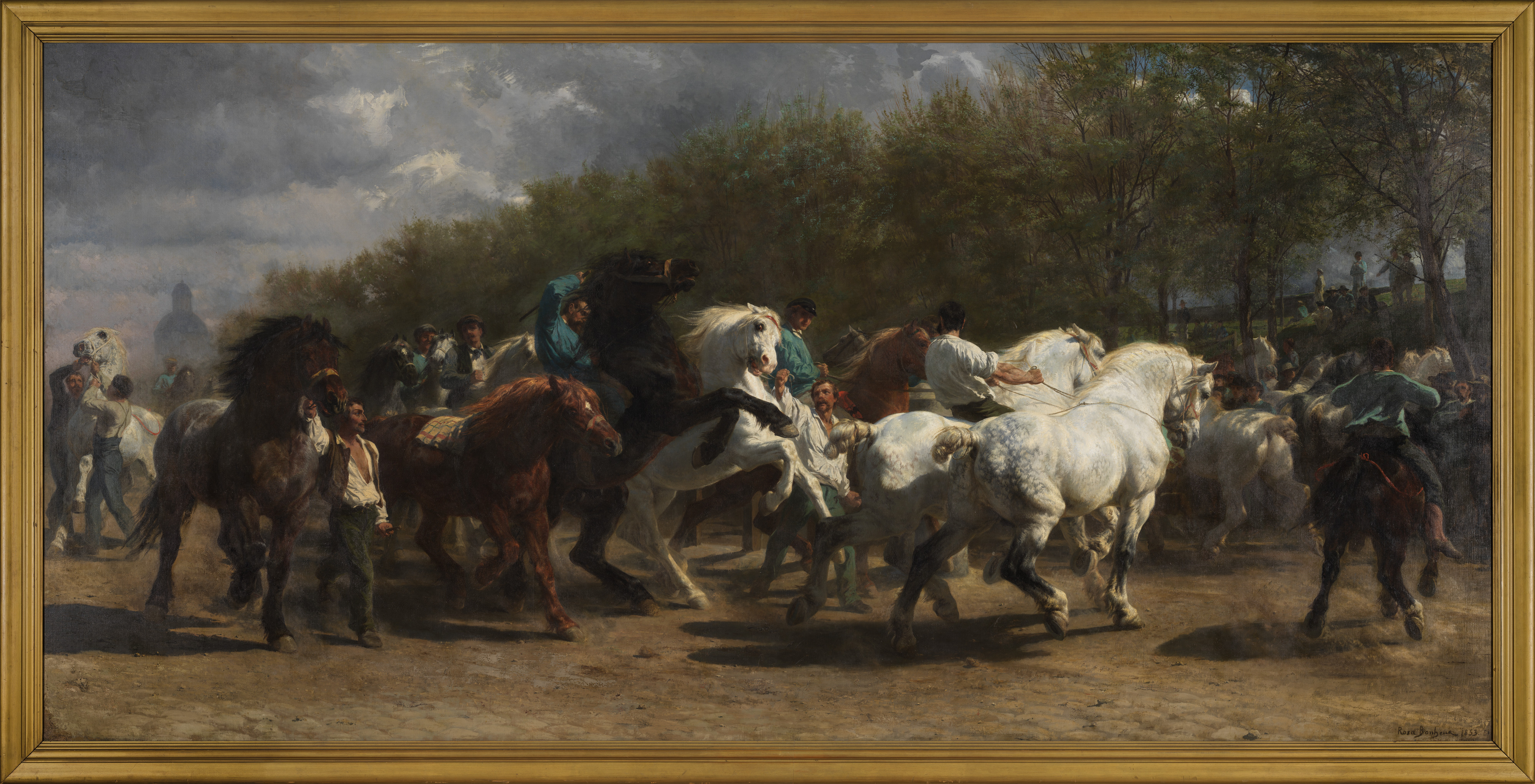
Rosa Bonheur — "The Horse Fair" (1852–55), public domain
The Stoic shield against rage.
In the Enchiridion (Chapter 42), Epictetus writes: «Ὅταν σε λυπήσῃ ἄνθρωπος, μὴ τροχῶν τοὺς πράγματα καὶ λέγε· οὗτος ὁ ἄνθρωπος ᾗ νομίζει πρᾶξεν.» — "When someone provokes you, don't review their misdeeds. Say: ‘He acts according to his own understanding.’"
How does this tame anger?
Epictetus believed dwelling on others' faults only deepens the wound. The Stoic answer isn’t to deny frustration, but to refuse its chains: see the other as limited, mistaken, sometimes blind—just like you. No one is more disturbed by your anger than you.
Forged in hardship, not theory.
Epictetus taught this from experience—he spent years as a slave before founding his school. If he could find freedom in letting go of rage, maybe we aren’t as powerless as we think.
Epictetus believed you can't control others—only your reaction. He turned irritation into an exercise: step back, see the person, not just the offense.
