
Epictetus on What You Truly Control
"Some things are up to us, and some things are not." Epictetus, in the Enchiridion, writes: «Τῶν πραγμάτων τὰ μὲν ἐφ’ ἡμῖν ἐστίν, τὰ δ’ οὐκ ἐφ’ ἡμῖν» — "Some things are up to us, others are not." This bare sentence is the root of every Stoic calm.
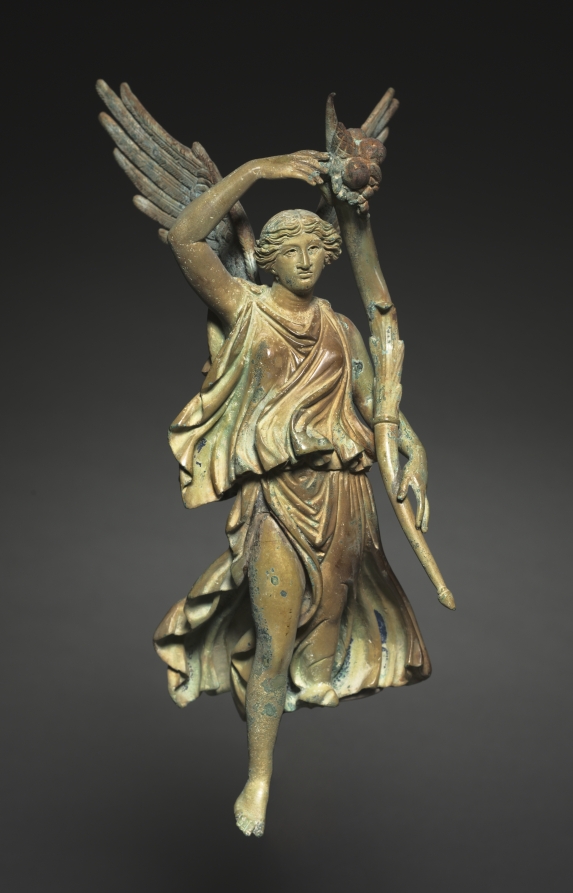
Unknown — "Victory with Cornucopia (Chariot Attachment)" (40–68 CE), CC0
The Stoic fork in the road.
Epictetus, opening his Enchiridion (section 1), lays out the core: «Τῶν πραγμάτων τὰ μὲν ἐφ’ ἡμῖν ἐστίν, τὰ δ’ οὐκ ἐφ’ ἡμῖν» — "Some things are up to us, some are not." You can almost hear the classroom go silent. Anxiety, for him, comes from not knowing the difference.
What’s up to you?
Epictetus taught that your opinions, your impulses, your desires—these are yours. Wealth, reputation, your health, other people? Not yours. Clinging to what you can’t control is torment. He wanted you to cut the chain—accept, adjust, and get free.
A slave who drew the line.
Epictetus taught barefoot, his leg crippled by a former master. He didn’t sugarcoat how little you truly control. But that was the point: if he could find his freedom inside those chains, so could anyone. His philosophy still echoes in every self-help aisle.
Epictetus was born a slave and left in pain for life. But this line—chiseled as a law—tells you where freedom starts. People still pay to hear it from a therapist. He just charged you a stare.
