
Epictetus on Agency
"First say to yourself what you would be; and then do what you have to do." Epictetus didn’t wait for permission—he wrote his orders to himself, in chains.
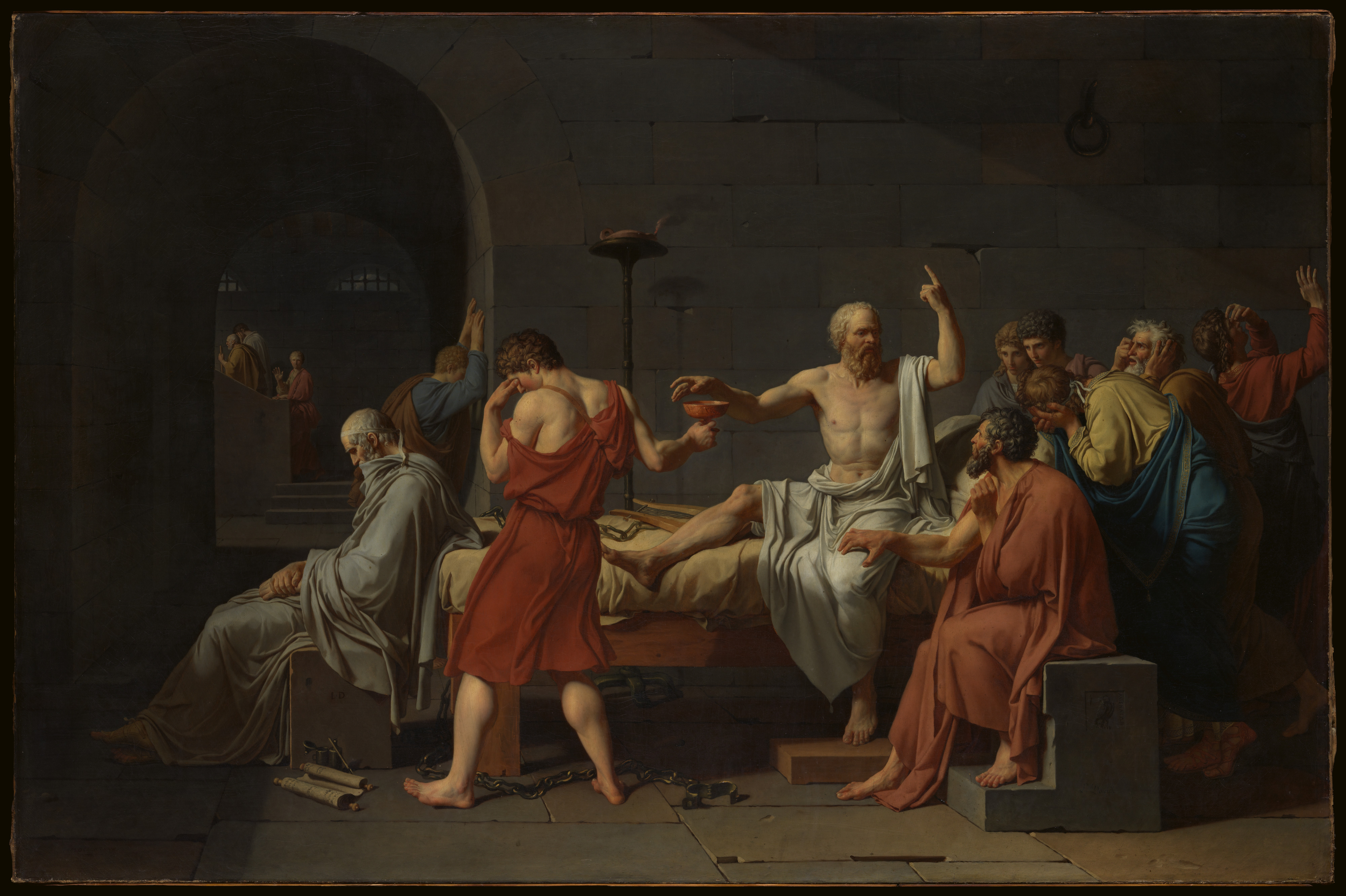
Jacques Louis David — "The Death of Socrates" (1787), public domain
Epictetus lays down the line.
Epictetus, in Discourses Book III, 23, writes: «Πρῶτον εἰπὲ σεαυτῷ τί ἔσεσθαι βούλει· εἶτα ὃ ποεῖν δεῖ ποίει.» — "First say to yourself what you would be; and then do what you have to do." This wasn’t theory for him—he had nothing, not even citizenship.
Making the choice your own.
Epictetus was enslaved as a child, freed as a man, and never once played the victim card. To him, agency isn’t a gift, it’s a muscle. Don’t ask ‘what will happen?’ Ask ‘who must I be, no matter what happens?’ Decide, then act—no one can steal that.
A Stoic with scars.
Epictetus walked with a limp, lived poorer than most slaves, and still drew crowds for his teaching. He believed every excuse was just a story we tell ourselves. The power to choose who we become? That’s the Stoic inheritance—still on the table, every day.
Epictetus teaches the most radical Stoic freedom: decide who you want to be, then act. Not tomorrow, not after apologies—the work starts inward, not up on a stage.
